
TL;DR

Turn quiet afternoons into listening time
- Thousands of audiobooks, podcasts and originals
- Listen on your phone, tablet or Echo — also offline
- Cancel anytime
Sock aids help guide socks onto your feet, while long-handled shoehorns help your heel slide into a shoe; dressing sticks, no-tie laces, and adjustable footwear can help with other steps. Choose an aid based on the task, your reach and grip, and whether it works with your socks and shoes. Practice while seated, follow the device instructions, and ask your care team about suitable movements after surgery or when balance is a concern.
Some mornings, getting a sock over your heel can feel like trying to reach the far side of a garden bed without leaning too far. A small dressing aid can make that everyday task easier to manage while you keep your own routine and independence.
Simple aids for putting on shoes and socks include sock aids, long-handled shoehorns, dressing sticks, and easier-to-adjust footwear. Each helps with a different part of getting dressed. This guide explains what these aids do, how to match them to your socks and shoes, and what to keep in mind when you try one at home.
You do not need to change your whole wardrobe or morning routine at once. Start with the step that causes the most fuss—perhaps pulling on a sock, guiding a heel into a shoe, or reaching laces—and take it from there. A steady chair and a little practice can make a new tool feel more natural.
A sock aid helps guide on a sock; a shoehorn helps your heel slide into a shoe, so they address different tasks.
Choose an aid based on your reach, grip, balance, socks, and shoe openings—not age alone.
Practice while seated in a stable chair and follow the device instructions.
Compression garments and high-top or narrow shoes may need a different aid or design.
Ask your surgeon or occupational therapist about suitable devices and movements during recovery.
A Practical Guide · Dressing With Ease
Simple Aids for Putting On Shoes and Socks
The right small tool can make a familiar morning routine easier to manage. Start with the step that causes the most fuss, then choose an aid that works with your reach, grip, socks, and shoes.
Match the aid to the task
Think through the step that slows you down before choosing a tool. Age alone does not tell you what will suit you.
These assistive devices can help reduce bending, reaching, gripping, or balancing during dressing. They support a familiar routine; they do not treat the condition that makes dressing difficult.
Sock aid
Holds a sock open while you slide your foot in and pull straps or cords to guide it up.
Long-handled shoehorn
Gives your heel a smooth path past the back of a shoe, with less bending.
Dressing stick
A hook or shaped end can help position clothing or move a heel or shoe into place.
Elastic or no-tie laces
Can make shoes easier to slip on and off. Check that the fit still feels secure.
Adjustable shoes
Wide openings and easy closures may help. An aid cannot fix a shoe that pinches or feels unstable.
One routine, different tools
Dimensions and designs vary. Check the device with the socks and shoes you usually wear.
| Aid | What it helps with | What to check |
|---|---|---|
| Sock aid | Guides a sock over your toes and heel as you pull straps or cords. | Opening width, cord length, sock thickness, and how easily you can load it. |
| Long-handled shoehorn | Gives your heel a smooth path over the back of a shoe. | Reach while seated, handle control, and room inside the shoe. |
| Dressing stick | Helps position clothing or move a heel or shoe into place. | Whether its hook or end suits the task you need help with. |
| Elastic / no-tie laces | Lets you slip shoes on and off without tying each time. | Whether you can still get the snug fit you want. |
| Adjustable footwear | Offers a wider opening or closure that is easier to manage. | A secure, comfortable fit once the shoe is on. |
Compatibility matters. Thick socks, compression garments, high-top shoes, and narrow openings may need a different aid or design. A tool can ease a motion, but it cannot make an unsuitable shoe fit well.
Take it one steady step at a time
Many people use a sock aid while seated. Follow the product directions; designs and loading methods differ.
Settle in
Sit in a stable chair that does not rock or roll. Keep the aid and sock close.
Load the sock
Fit it onto the aid as directed, with the heel and toe in the intended position.
Place your foot
Guide your foot into the sock opening and forward as far as the aid allows.
Pull steadily
Use the straps or cords to bring the sock over your foot and up your leg.
Check and pause
Look for folds or discomfort. Stop if you feel pain or notice skin irritation.
Comfort, control, and a secure fit
Practice can help a new tool feel more natural. Choose a setup that feels steady and easy to manage.
Compression needs may differ
Compression stockings are tighter and can be difficult to load onto a standard sock aid. Ask a clinician or suitable supplier about a device designed for compression garments, and follow any instructions you have been given.
Get advice for your situation
After hip or other surgery, movement restrictions vary. Ask your surgeon or occupational therapist which devices and movements are appropriate. Seek advice if balance is a concern or pain, swelling, or skin problems persist.
From the troublesome step to the right support
A small change can support your usual routine while you stay in charge of how you get dressed.
Find the aid that helps with your hardest dressing step
Simple aids for putting on shoes and socks are tools that help you manage footwear with less bending, reaching, gripping, or balancing. A sock aid guides a sock onto your foot, while a shoehorn helps your heel slide into a shoe. Other options can help you manage clothes, laces, or shoe openings.
The key is to match the aid to the step that slows you down. For example, if you can put on your socks comfortably but struggle to guide your heel past the stiff back of a walking shoe, a long-handled shoehorn may be the useful tool. If socks are the difficult part, a shoehorn will not solve that problem by itself.
People use dressing aids for many reasons, including limited reach, reduced grip, arthritis, back or hip discomfort, injury, pregnancy, or recovery after surgery. Some use one for a short period; others keep it beside the chair where they get dressed. Age alone does not tell you whether an aid will suit you. Your reach, strength, balance, vision, and footwear all matter.
A good dressing aid supports a familiar routine: it helps with one practical task while leaving you in charge of how you get dressed.
Try naming the troublesome step before shopping or asking for advice. Is it getting a sock over your toes, pulling it up, reaching the laces, or easing your heel into a snug shoe? That simple question can help you sort through options without buying tools for a problem you do not have.
Products Worth Considering

Solo Stove Bonfire 2.0 Smokeless Wood-Burning Fire Pit with Stand, Silver

Husqvarna Power Axe 350i 18-Inch Cordless Chainsaw Kit

Orbit B-hyve XR 16-Zone Indoor/Outdoor Smart Sprinkler Timer
As an affiliate, we earn on qualifying purchases.
See what each aid can do before you choose
A sock aid pulls a sock into position, while a long-handled shoehorn helps your heel move into a shoe; each tool serves a separate job. Dressing sticks, no-tie laces, and adjustable shoes can help with other steps. Thinking through your whole dressing routine can show whether one aid is enough or two would work better.
| Aid | What it helps with | What to check |
|---|---|---|
| Sock aid | Guides a sock over your toes and heel as you pull straps or cords. | Opening width, cord length, sock thickness, and how easily you can load the sock. |
| Long-handled shoehorn | Gives your heel a smooth path over the back of a shoe. | Reach while seated, handle control, and room inside the shoe. |
| Dressing stick | Helps position clothing or move a heel or shoe into place. | Whether its hook or end suits the task you need help with. |
| Elastic or no-tie laces | Let you slip shoes on and off without tying each time. | Whether you can still get the snug fit you want. |
| Adjustable footwear | Offers a wider opening or closure that is easier to manage. | A secure, comfortable fit once the shoe is on. |
Imagine putting on a pair of lace-up shoes before stepping outside to water the pots. If tying is the hardest part, elastic laces could make the routine simpler. If your heel catches on the shoe collar, a shoehorn addresses that snag. If the shoe itself feels too tight or unstable, adding an aid may not make it suitable; the fit needs attention too. This distinction matters because an aid can ease a motion, but it cannot correct a shoe that pinches or lets your foot slide.
These tools are not treatments for the condition that makes dressing hard. They are practical supports, and a design that works beautifully for one person may frustrate someone with different socks, reach, or hand strength. A longer cord may help you reach, for instance, but can be harder to control; a wider sock aid may accept thicker socks but may not fit every shoe opening. Check the product instructions and dimensions, and consider how the aid will work with your usual footwear rather than judging it by one feature alone.
Put on socks with a sock aid in a steady, simple sequence
A sock aid holds the sock open so you can guide your foot into it and pull the sock up using straps or cords. Many people use one while seated in a stable chair, which gives them a more settled position for the task. Designs vary: some are flexible, some rigid, and openings and strap lengths differ.
- Sit securely in a chair that does not rock or roll. Keep the aid and sock within easy reach.
- Load the sock onto the aid according to its instructions, making sure the heel and toe sit in the intended position.
- Place your foot into the sock opening and guide it forward as far as the aid allows.
- Pull the straps or cords steadily to bring the sock over your foot and up your leg.
- Check the result for folds or discomfort and pause if you feel pain or notice skin irritation.
For example, you might set your sock aid beside the same sturdy chair each morning, with clean socks in a small basket nearby. That keeps the routine organized, like laying out a trowel and gloves before tending a window box. You may need a few tries to find how the sock sits best on your particular aid.
Thick socks, high-top footwear, and compression garments can change how well a standard sock aid works. Compression stockings are tighter and may be hard to load onto an ordinary design. If you wear them, ask a clinician or suitable supplier about a device intended for compression garments, and follow any instructions you have been given.
Use a shoehorn to guide your heel without wrestling your shoe
A long-handled shoehorn gives your heel a smooth surface to slide over as you put on a shoe. It can reduce how far you need to bend, while a shorter shoehorn may feel easier to control in close quarters. The right length depends on how far you can comfortably reach while seated and how steady the tool feels in your hand.
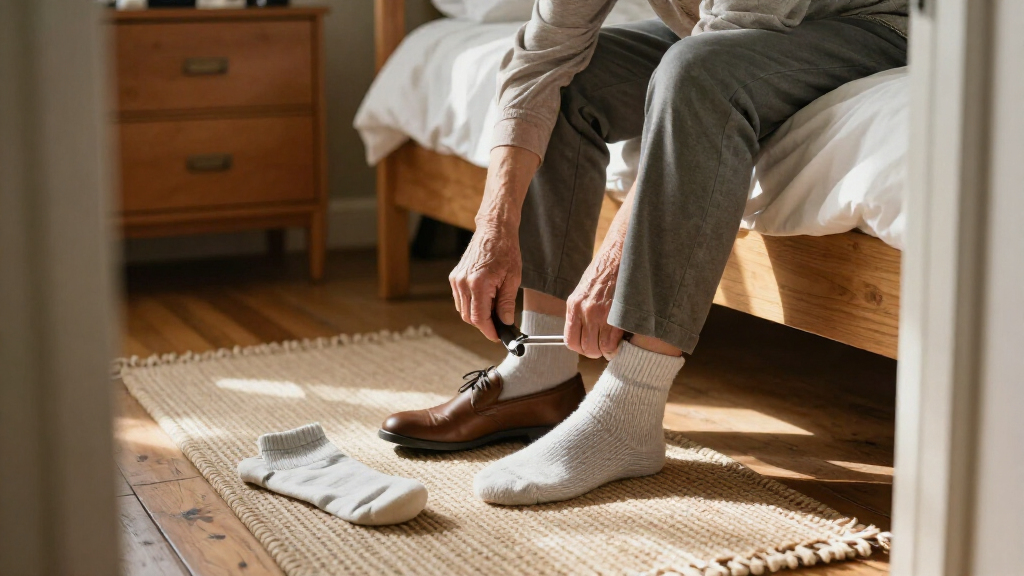
To use one, sit in a stable chair and place the shoehorn inside the back of your shoe, following the product directions. Guide your foot into the shoe, then let your heel slide along the shoehorn rather than folding the back of the shoe under it. Remove the tool once your heel is seated, and check that the shoe feels secure before standing.
Say you have a favorite pair of walking shoes with a firm heel collar. Your foot reaches the toe area easily, but the back keeps catching. A shoehorn can provide a little track for the heel, much like a smooth wooden ramp helps a wheel roll over a small lip. If you also find the laces awkward, no-tie laces may address that separate part of the task.
A longer handle can reduce bending, but it can also be harder to maneuver in a small entryway or around a low shoe rack. If the shoe opening is narrow or the shoe is high-top, the aid may not move freely. Give yourself room, check the fit, and stop if using the device causes pain, skin irritation, or an unsteady position.
Make shoes easier to manage without giving up a secure fit
Wide openings and adjustable closures can make footwear easier to put on, while a secure fit helps the shoe stay comfortable once it is on. A device cannot make an overly tight or unstable shoe suitable. Look at the opening, fastening, and fit together instead of assuming that one tool will fix every difficulty.
For instance, a roomy shoe with a hook-and-loop closure may be easier to open wide, guide a foot into, and fasten than a narrow lace-up shoe. Elastic or no-tie laces can help if tying takes too much reach or grip, but they can make the fit less adjustable. Check that the shoe still feels comfortably snug and that your foot does not slide around inside it.
It also helps to think about the pairing. A sock aid might guide on your sock but do nothing for a tight shoe opening. A long shoehorn may help with that shoe’s heel, but it will not pull your sock over your toes. If you are shopping, check whether the aid’s size and shape work with the footwear you actually wear; descriptions and pictures may not show that clearly.
- Openings: Look for enough room to guide your foot in.
- Closures: Choose fastenings you can manage while seated.
- Fit: Check that the shoe stays secure and comfortable.
- Compatibility: Match the aid to your sock thickness and shoe shape.
Keep the goal modest and practical: make the morning step easier while keeping footwear comfortable for the day ahead. A shoe that is easy to slip into but feels loose once you stand may not be the right answer.
Practice safely and ask for guidance when your situation calls for it
Practice with a dressing aid while seated in a stable chair, and follow its instructions before adding it to your usual routine. The tool should help you manage the task without creating pain, skin irritation, or an unsafe loss of balance. If a movement feels awkward, pause and adjust your setup rather than rushing.
A practical first try might be putting the aid, sock, and shoe beside a firm chair in a well-lit spot. Keep both feet supported as you work, and avoid stretching across the room for a missing item. A bright patch of morning sun can be pleasant, but glare that makes it hard to see the sock opening is a good reason to move the chair.
After hip surgery or another operation, restrictions differ from person to person. Ask your surgeon or occupational therapist which movements and devices fit your recovery instructions, and request a demonstration if you are unsure. A physical therapist, pharmacist, or medical-equipment supplier may also help you compare options, though advice about post-surgery movement should come from your care team.
If you have persistent difficulty, pain, swelling, or skin problems, speak with a qualified healthcare professional. An occupational therapist can help identify whether the trouble comes from reach, grip, balance, or the footwear itself, then show you how to use a suitable aid. That kind of practical guidance can make an unfamiliar tool feel less like a puzzle and more like an ordinary part of getting ready.
Build a calmer morning routine with one small change
The most useful first step is to identify the part of getting dressed that takes the most effort, then try one aid designed for that task. That keeps the choice manageable and lets you see whether it fits your routine. You can add another change later if a different step still gets in the way.
Suppose mornings begin with a walk to the garden gate, but pulling on socks and tying shoes leaves you tired before you reach it. You might first try a sock aid with your usual socks, using it at the same steady chair each day. If socks go on easily but laces remain a nuisance, adjustable shoes or elastic laces may be the next change to explore.
- Name the hard step: socks, heel, laces, reach, or balance.
- Check your usual footwear: note sock thickness, shoe opening, and closure.
- Try one matching aid: follow instructions and practice while seated.
- Check comfort and control: make sure the shoe fits securely and the task feels steady.
- Seek advice if needed: especially during recovery or if pain or balance is a concern.
Write down what worked if you are comparing options: “wide sock aid loads easily,” or “long shoehorn reaches, but feels awkward beside the rack.” These small observations are more useful than a long list of features with no connection to your own morning. Good aids are personal; the right one is the one you can use comfortably with your own clothes and shoes.
Frequently Asked Questions
Which is easier to use: a sock aid or a long-handled shoehorn?
They help with different steps. A sock aid guides a sock onto your foot; a shoehorn helps your heel slide into a shoe. If both steps are difficult, you may find both useful.
Will a standard sock aid work with compression socks?
Not always. Compression garments are tighter and can be harder to load onto a standard sock aid. Ask a clinician or supplier about a device designed for compression stockings and follow any care instructions you have received.
Can I use these aids after a hip replacement?
A dressing aid may be considered during recovery, but movement restrictions vary. Follow your surgical team’s instructions and ask an occupational therapist to demonstrate devices that suit your recovery plan.
Do I need special shoes to use a dressing aid?
Not necessarily. A wider opening or adjustable closure may make shoes easier to manage, but the shoe still needs to fit securely and comfortably. Check that the aid works with the opening and style of footwear you already wear.
How do I choose the right length for a shoehorn?
Consider how far you can comfortably reach while seated and how much control you have over the handle. A longer shoehorn can reduce bending, while a shorter one may be easier to maneuver around a low rack or in a small room.
Are shoe and sock aids suitable for older adults?
Age alone does not determine whether an aid will suit you. Reach, hand strength, dexterity, vision, balance, and the design of your footwear are more useful factors to consider.
Conclusion
Start with the one part of dressing that gives you the most trouble, then choose an aid made for that step. A sock aid, long-handled shoehorn, easier closure, or a combination may make the routine more comfortable, provided the tool works with your footwear and feels steady to use.
Set your aid beside a dependable chair, take a little time to practice, and let the rest of the morning unfold at its own pace. Sometimes a small change is all it takes to get from the bedroom to the garden gate with your shoes on and your hands free.