
TL;DR

Turn quiet afternoons into listening time
- Thousands of audiobooks, podcasts and originals
- Listen on your phone, tablet or Echo — also offline
- Cancel anytime
Regular sweeping, weed control, stain treatment, and seasonal upkeep prevent dirt, moss, stains, and drainage issues. A little effort throughout the year keeps your driveway and paths tidy and safe without heavy work or harsh chemicals.
Imagine pulling into your driveway on a bright morning, the smooth surface gleaming, leaves swept away, no weeds to trip over. Keeping your driveway and paths tidy isn’t just about curb appeal — it’s about safety, protecting your investment, and saving time and money. When dirt, moss, and stains are dealt with regularly, you skip the big, expensive repairs that come with neglect. The secret? Light, consistent effort supported by seasonal checks. It’s a simple routine that pays off, especially in a country setting where nature’s bounty never stops.
Think of your driveway like a well-loved country road — it needs care, not constant overhaul. With just a few minutes here and there, you can keep it looking good, functioning well, and ready for any weather. Ready to learn how to keep your outdoor walkways in tip-top shape year-round? Let’s walk through straightforward tips, seasonal checklists, and easy tricks for a tidy, safe, and charming driveway and path.
Sweep your driveway and path every one or two weeks to prevent dirt and weed buildup.
Pull weeds early and maintain jointing sand to keep cracks sealed and weed-free.
Treat stains promptly with safe, surface-compatible products to keep surfaces looking fresh.
Use pressure washing wisely—start with low pressure and avoid damaging delicate surfaces.
Regularly check and maintain drainage channels to prevent standing water and frost damage.
Keeping the Driveway and Path Tidy Year-Round
Regular sweeping, weed control, stain treatment, and seasonal upkeep prevent dirt, moss, stains, and drainage issues. A little effort throughout the year keeps your driveway and paths tidy and safe — without heavy work or harsh chemicals.
Think of your driveway like a well-loved country road: it needs care, not constant overhaul. With a few minutes here and there, it stays good-looking, functional, and ready for any weather.
How Regular Sweeping Keeps Dirt, Leaves & Moss at Bay
Sweeping every one or two weeks clears leaves, soil, grass clippings, and twigs before they become a slipping hazard or stain the surface. Organic debris that settles into cracks traps moisture, fostering weed and moss growth — and blocked drainage leads to pooling, frost damage, and erosion.
Stiff-Bristled Broom
Use a stiff-bristled broom for stubborn dirt and moss. A quick Saturday sweep after heavy winds keeps the surface fresh and prevents embedding.
Shaded Corners First
Pay special attention to shaded areas where moss loves to hide — these damp spots are where growth begins and spreads outward.
Clear Wet Leaves Fast
Remove leaves promptly, especially when wet, to prevent staining and decomposition inside paving joints — the main culprit for weed growth.
Controlling Weeds & Moss Without Harsh Chemicals
Weeds grow in accumulated dirt rather than through intact paving — and they widen cracks and cause structural damage if left unchecked. Moss and algae thrive in damp, shaded, poorly drained spots, creating slippery hazards. Natural, manual methods are safer for your environment and more sustainable.
Natural Prevention
- Pull weeds before they seed to prevent future spread
- Replenish jointing sand annually or after pressure washing
- Improve drainage and increase sunlight to shaded areas
- Use diluted vinegar solutions or biological moss treatments, sparingly
Environmental Care
- Avoid overuse of herbicides near ponds, lawns, and waterways
- Trim overhanging branches to let sunlight dry the surface
- Choose products suitable for your paving material
- Follow local rules for runoff and stormwater
Quick & Effective Stain Removal
Treat spills promptly — oil, rust, paint, and tire marks become harder to remove over time. Fresh oil can be absorbed with kitty litter or sawdust; stubborn stains need a surface-approved degreaser. Always test in a hidden spot first.
| Stain Type | First Response | Suitable Method | Warning |
|---|---|---|---|
| Fresh oil / fuel | ✓ Absorb immediately | Granular absorbent (kitty litter, sawdust), then sweep | ✗ Never wash into a drain |
| Set-in grease | ~ Degreaser needed | Degreaser approved for the surface | ~ Test in hidden spot first |
| Rust & paint | ~ Spot-test cleaner | Rust or masonry cleaner, inconspicuous test area | ~ Never mix cleaning chemicals |
| Organic stains | ✓ Biodegradable cleaner | Non-acidic, biodegradable treatment | ✗ Avoid acids on limestone & marble |
| Tire marks | ✓ Prompt scrub | Mild detergent, stiff brush | ~ Avoid aggressive abrasion |
Pressure Washing: The Safe-Pressure Sequence
Excessive pressure can etch concrete, damage asphalt, loosen mortar, strip coatings, and wash sand from block-paving joints. Follow this sequence every time to clean effectively while preserving the surface.
Start Lowest
Begin with the lowest effective pressure setting before increasing.
Test Hidden Area
Gauge impact on a small, inconspicuous patch of surface first.
Fan Spray, Moving
Use a fan nozzle and keep it moving — never hold in one spot.
Dry & Refill
Let the surface dry, then replace lost jointing sand in block paving.
Seal (Optional)
Consider a compatible sealant on a clean, dry, sound surface.
Drainage: Where Neglect Does the Most Damage
Standing water encourages algae, frost damage, settlement, and staining. Keep channels, gullies, and drain covers clear — and watch for low spots, displaced edging, blocked permeable joints, or runoff flowing toward the house. Relative impact of common neglect factors:
Illustrative severity of consequences from neglected maintenance · Winter note: clear snow before compaction, use plastic-edged shovels, and limit salt — repeated use damages vegetation, corrodes metal, and deteriorates concrete.
The Seasonal Maintenance Calendar
Light, consistent effort supported by seasonal checks is the whole secret. Here is what each season asks of you.
- Remove winter grit, leaves, and sediment
- Clear drains and channels
- Check for frost damage, cracks, and loose edging
- Treat early moss and weeds
- Deep-clean and refill block-paving joints
- Sweep regularly during mowing and gardening
- Remove weeds before they set seed
- Treat oil, barbecue grease, paint, and rust promptly
- Inspect for dry-weather cracking
- Apply sealant only to clean, dry, sound surfaces
- Remove fallen leaves frequently
- Cut back plants that obstruct paths
- Clear drains before heavy rain
- Check outdoor lighting and shaded slip spots
- Prepare grit for winter traction
How Regular Sweeping Keeps Dirt, Leaves, and Moss at Bay
Keeping your driveway free of debris is the foundation of a tidy, safe space. Sweeping every one or two weeks clears leaves, soil, grass clippings, and twigs before they become a slipping hazard or stain the surface. This routine isn’t just about appearance; it’s about preventing organic matter from settling into cracks and joints, which can trap moisture and foster weed and moss growth. When organic debris accumulates, it creates a damp environment that encourages moss and weeds, which can damage the surface over time. Regular sweeping also ensures water drains properly, reducing pooling that can cause frost damage or surface erosion. Skipping this step might seem minor, but over time, it allows dirt and organic matter to embed into the surface, making stains and moss harder to remove and increasing the risk of costly repairs. By maintaining a clean surface, you extend the life of your driveway and keep it safe underfoot. For example, a quick sweep on Saturday mornings after heavy winds keeps your driveway looking fresh and reduces moss buildup in shaded corners. It’s a simple habit that prevents dirt from settling into joints and keeps your paving joints free of organic matter, which is the main culprit for weed growth. Regular sweeping is the most straightforward way to maintain a clean, safe surface with minimal effort.
- Use a stiff-bristled broom for stubborn dirt and moss.
- Pay special attention to shaded areas where moss loves to hide.
- Clear leaves promptly, especially when wet, to prevent staining.
As an affiliate, we earn on qualifying purchases.
Controlling Weeds and Moss Without Harsh Chemicals
Weeds and moss love to sneak into cracks and shaded corners of your driveway and path, but the implications of ignoring them go beyond just an untidy appearance. Weeds can expand into cracks, widening them and causing structural damage over time, which can lead to costly repairs if left unchecked. Moss and algae thrive in damp, shaded spots, especially where drainage is poor or organic debris accumulates, creating a slippery hazard that increases the risk of falls. The long-term issue? If these growths are left untreated, they can weaken the surface material, accelerate deterioration, and make maintenance more difficult and expensive later. The good news? You don’t need harsh chemicals to keep them at bay—using natural, manual methods can be safer for your environment and more sustainable. Pulling weeds early prevents them from seeding and spreading further, saving you from more extensive weed problems later. Replenishing jointing sand maintains the integrity of the surface, preventing weeds from establishing in gaps. Improving drainage and trimming overhanging branches allow more sunlight to reach shaded areas, which is crucial because moss and algae favor damp, dark environments. These measures help keep the surface dry and less hospitable to growths. Instead of relying solely on chemical weed killers, try manual removal and strategic plant trimming. If moss persists, a biological moss treatment or a solution of diluted vinegar can help, applied carefully and sparingly. Avoid overuse of herbicides and moss killers near ponds, vegetable gardens, or waterways to protect the environment. The key is understanding that these natural methods, combined with environmental adjustments, promote long-term prevention and safeguard your outdoor space’s ecological balance.
- Pull weeds before they seed to prevent future spread.
- Replenish jointing sand annually or after pressure washing.
- Improve drainage and increase sunlight exposure to shaded areas.
- Use natural moss treatments, like vinegar solutions, as needed.
As an affiliate, we earn on qualifying purchases.
Quick and Effective Stain Removal for a Fresh Look
Spills happen—oil, rust, paint, or tire marks can mar your driveway’s appearance. The key is to treat them promptly before stains seep deep or set in. Fresh oil can be absorbed with granular absorbents like kitty litter or sawdust, then swept away. For stubborn stains, a degreaser approved for your surface can make a big difference. Treating stains early prevents them from penetrating deeply into the surface material, which can cause permanent discoloration and deterioration. When oil or other stubborn stains are left untreated, they can become embedded, making removal much more difficult and often requiring more aggressive methods that risk damaging the surface. Prompt action preserves the appearance and structural integrity of your driveway, saving you time and money in the long run. Imagine a car leaking oil during a rainstorm — quick cleaning prevents a dark, oily patch that’s tough to remove later. Always test cleaners in a hidden spot first, especially on natural stone or delicate concrete. Avoid acid-based cleaners on limestone or marble, as they can cause lasting damage. Regular stain treatment keeps your driveway looking inviting and prevents stains from becoming permanent eyesores. Being proactive with spills means less scrubbing later, and your outdoor space stays fresh and welcoming.
- Absorb fresh oil immediately with an appropriate granular material.
- Use a compatible degreaser for oily stains.
- Test cleaning products in a hidden spot first.
- Treat organic stains with biodegradable, non-acidic cleaners.
As an affiliate, we earn on qualifying purchases.
Pressure Washing: When and How to Do It Safely
Pressure washing can restore a clean look but must be used carefully to avoid damage. Start with the lowest pressure setting and a fan spray nozzle, keeping the nozzle moving smoothly across the surface. For example, a gentle pass over your concrete driveway can remove moss and dirt without etching or loosening mortar. Using excessive pressure or holding the nozzle in one spot can strip protective coatings, erode the surface, or loosen mortar joints, leading to costly repairs. Understanding the balance between effective cleaning and surface preservation is crucial. Proper technique involves starting with low pressure and testing on a small, inconspicuous area to gauge the impact. After washing, let the surface dry thoroughly and check for lost jointing sand, which should be replenished to maintain surface stability and prevent weed growth. If sealing, choose a product suitable for your surface and ensure it’s applied to a clean, dry surface. Overuse or improper technique can cause more harm than good—so always prioritize gentle cleaning methods and follow manufacturer instructions to protect your investment while achieving a thorough clean.
- Start with the lowest pressure setting and a wide spray.
- Keep the nozzle moving and avoid holding it too close.
- Replenish jointing sand after washing if needed.
- Allow surfaces to dry fully before sealing or sealing-related maintenance.
As an affiliate, we earn on qualifying purchases.
Maintain Drainage to Prevent Costly Water Problems
Proper drainage is essential because standing water can accelerate deterioration of your driveway and path, lead to moss and algae growth, and cause frost damage in winter. When water isn’t directed away from the surface, it seeps into cracks and joints, enlarging them and weakening the structure over time. Poor drainage can also create pooling that freezes, leading to surface spalling or heaving, which can be dangerous and costly to repair. Regularly inspecting and clearing gullies, drains, and channels prevents blockages, ensuring water flows freely. Checking for low spots or uneven surfaces helps identify areas where water might collect, allowing you to regrade or install additional drainage solutions proactively. Keeping gutters clean and directing runoff away from paths prevents excess water from pooling. Implementing minor drainage improvements—like adding a drain or regrading—can significantly extend the lifespan of your driveway and keep it safer during wet or cold weather. Remember, effective drainage not only preserves the surface but also reduces your long-term maintenance costs and safety hazards. Ensuring water is properly managed is a key step toward a durable, long-lasting outdoor space.
- Regularly inspect and clear all drainage outlets.
- Watch for low spots or uneven surfaces that trap water.
- Regrade or add drainage channels if water pools persist.
- Keep gutters clean and direct runoff away from paths.
Seasonal Checklists for a Tidy Driveway All Year
Staying on top of maintenance means knowing what to do each season. Here’s a quick guide to keep your driveway and path in great shape year-round.
Spring
- Remove winter grit, leaves, and sediment.
- Clear drains and check for frost damage or cracks.
- Treat early moss and weeds before they spread.
- Deep-clean surfaces if needed and refill joints.
Summer
- Sweep regularly during mowing and gardening.
- Remove weeds before they flower or seed.
- Address oil, grease, or paint spills quickly.
- Inspect for cracks or dry-weather damage.
- Apply sealant only when the surface is clean and dry.
Autumn
- Frequent leaf removal, especially when wet.
- Trim back plants overhanging paths.
- Clear drains before heavy rains.
- Prepare snow tools and de-icer.
Winter
- Shovel snow before it gets compacted.
- Use sand or grit for traction, not excessive salt.
- Keep routes safe and clear of ice where possible.
- Avoid pressure washing before freezing weather.
- Monitor cracks and standing water, avoid cold-weather repairs.
Smart Tools and Trends for Effortless Maintenance
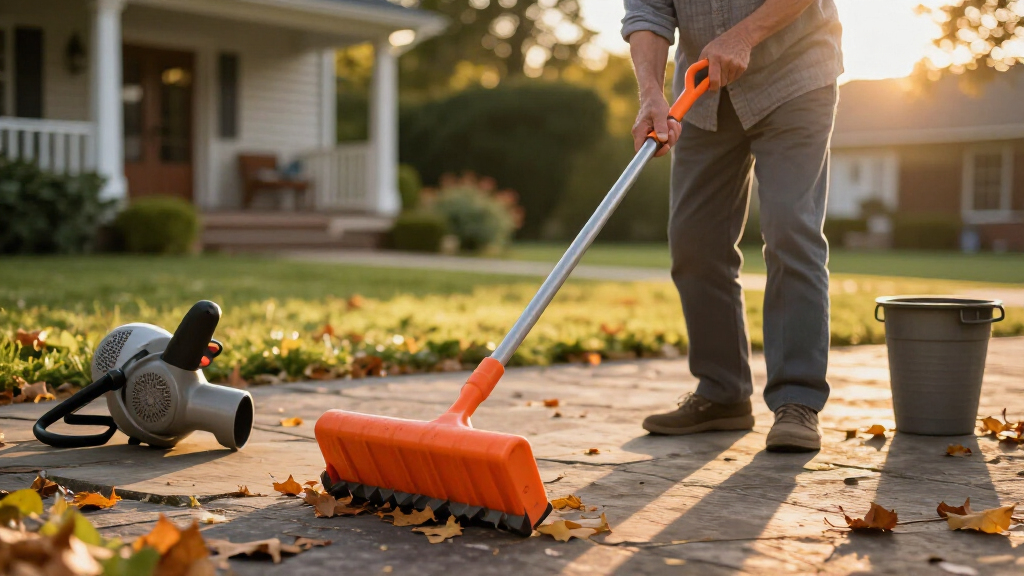
Modern tools make driveway upkeep easier and less labor-intensive. Battery-powered sweepers, blowers, and pressure washers are quieter, cleaner, and more maneuverable. For example, a cordless electric blower can tidy leaves faster than a manual broom, with less fatigue.
Water-saving innovations, like surface-cleaner attachments and targeted spray systems, reduce water use and overspray. Permeable paving materials, like resin-bound systems and gravel grids, are designed to handle stormwater and need periodic cleaning of joints and pores.
Biodegradable cleaners and biological moss treatments are gaining popularity. They work slowly but with less environmental impact, especially important near ponds or vegetable gardens. Robotic outdoor cleaners are emerging but still limited for homes due to cost and surface complexity.
Staying current with these trends helps you keep your driveway tidy with less effort and fewer worries about environmental impact or damage.
- Use cordless, battery-powered cleaning tools for convenience.
- Choose water-efficient attachments and environmentally friendly cleaners.
- Consider permeable paving options to manage stormwater naturally.
- Stay informed about new robotic or low-impact cleaning devices.
Frequently Asked Questions
How often should I sweep my driveway?
Sweep every one or two weeks, especially after storms or windy days. Regular sweeping prevents dirt, leaves, and organic matter from accumulating, which can lead to stains and moss growth over time.What’s the best way to prevent weeds between pavers?
Keep joints free of soil and organic debris, refill jointing sand annually, and pull weeds before they seed. Improving drainage and trimming overhanging branches also reduces shade and moisture that encourage weed growth.Is pressure washing safe for my driveway?
Yes, if you use a low-pressure setting and keep the nozzle moving. Always test in a small area first. Excessive pressure can damage surfaces or loosen mortar, so it’s best to use pressure washing sparingly and carefully.How can I remove moss without damaging my paving?
Start with sweeping and scrubbing with a stiff brush. If needed, apply a biological moss treatment or a diluted vinegar solution, following the product instructions. Improving drainage and sunlight helps prevent moss from returning.What’s the safest way to melt ice on my driveway?
Use sand or grit for traction, not excessive salt, which can harm plants and corrode metal. If you choose de-icing salts, pick a product suitable for your surface and apply sparingly. Always prioritize safety over chemical use.Conclusion
A tidy driveway isn’t just about looks; it’s about safety, preserving your paving, and making your country home welcoming all year. A little regular effort—sweeping, weed control, and seasonal checks—goes a long way. When you treat your outdoor surfaces with care and common sense, you enjoy a charming, safe, and low-maintenance yard that ages gracefully, season after season.
Think of your driveway as a country lane — it needs gentle, consistent tending, not heavy work. Keep it clear, keep it simple, and enjoy the inviting path to your cozy home.
Halloween Picks
halloween
As an affiliate, we earn on qualifying purchases.