
TL;DR

Get comfort and care essentials delivered free — and shop member deals
- Fast, free delivery on millions of items
- Access to Prime Big Deal Days deals on October 6–7
- Prime Video, Amazon Music and more included
Handling snow and ice on a country driveway is easier with a mix of simple tools, smart planning, and new technology. Proper preparation and regular upkeep prevent slips, damage, and wasted effort, making winter safer and less stressful.
Winter can turn your peaceful country driveway into a slick, icy challenge overnight. But a few smart tricks and the right tools make a world of difference. Instead of battling snow and ice with sheer effort, you can set yourself up for easier, safer chores each winter.
In this guide, you’ll find practical tips, new technology insights, and honest advice to keep your driveway clear without fuss. Think of it as a friendly chat about turning winter worries into simple, manageable tasks.
Pre-treat your driveway with eco-friendly de-icer before snow starts for easier removal.
Invest in a snow blower or a heated driveway system if you face frequent, heavy snowfalls.
Use sand or kitty litter for instant traction on icy patches, especially in shaded areas.
Ensure proper drainage around your driveway to prevent refreezing and ice buildup.
Regular winter maintenance prolongs your driveway’s life and keeps it safe all season.
Snow and Ice Made Easier on the Country Driveway
Winter chores become safer and lighter when timing, tools, traction, and drainage work together. Prepare before the storm, clear early, and protect the surface before frozen problems take hold.
Match the tool to the snow
A typical 20-foot-wide country driveway can demand serious effort. Quick clearing prevents compaction, while a balanced tool kit handles powder, wet snow, and isolated ice without exhausting the operator.
Ergonomic shovel
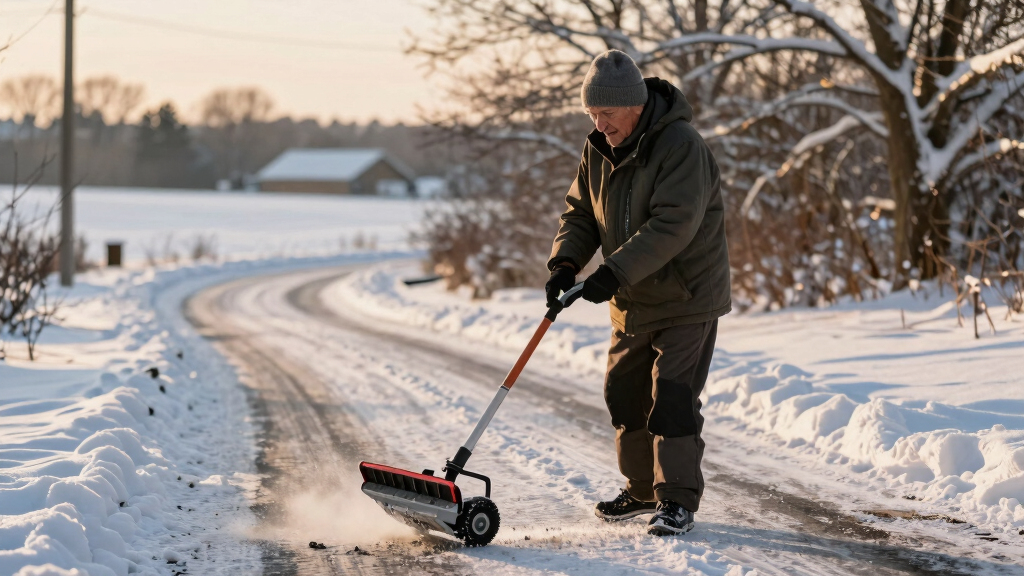
Low cost, quiet, and ideal for steps, edges, and small accumulations. Push whenever possible and lift smaller loads to reduce strain.
Snow blower
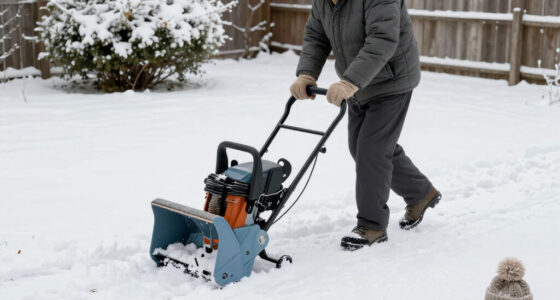
Strong everyday choice for long drives. It can halve clearing time versus shoveling, although dense wet snow may require slower passes.
Plow attachment
Best for substantial accumulation and large areas. Plan where snow will be stacked so piles do not block sightlines or drainage.
Fast melt has a tradeoff
The best product depends on temperature, surface material, nearby plants, and urgency. More product is not necessarily better: overapplication increases runoff, corrosion, and surface damage.
| Material | Cold-weather performance | Driveway impact | Plant impact | Best use | Cost |
|---|---|---|---|---|---|
| Calcium chloride | ✓ Strong | ~ Use sparingly | ~ Runoff risk | Rapid melting after severe cold | Medium |
| Magnesium chloride | ✓ Good | ✓ Less aggressive | ~ Moderate care | Balanced routine treatment | Medium |
| Rock salt | ✗ Weak below 20°F | ✗ Scaling risk | ✗ Higher harm | Budget use in milder cold | Low |
| Calcium magnesium acetate | ~ Slower | ✓ Gentler | ✓ Better choice | Pre-treatment near plants | High |
| Sand or kitty litter | ~ Adds traction only | ✓ No melting damage | ✓ Low chemical impact | Immediate grip on icy patches | Low |
Rule of thumb / Read the product label, confirm surface compatibility, and apply only the recommended amount.
A driveway that melts snow as it falls
Electric cables or hydronic tubing installed beneath the surface can prevent accumulation, reduce chemical use, and limit freeze-thaw stress. The convenience is significant, but climate and driveway size determine the value.
per square foot
Upfront costs can be substantial. Heated systems make the strongest case where heavy snow is frequent, manual work is difficult, or critical access must remain clear.
Frequent heavy snow + a large winter workload + long-term ownership makes heating more compelling. Occasional snowfall usually favors a blower, targeted mats, and disciplined pre-treatment.
Five moves that stop ice taking over
Timing connects every step. The aim is to prevent bonding, preserve traction, move water away, and repair small weaknesses before freeze-thaw cycles enlarge them.
Pre-treat lightly
Apply an eco-conscious de-icer to high-traffic, shaded, and sloped areas.
Clear early
Remove accumulation before traffic and temperature changes compact it.
Add traction
Use sand or kitty litter for immediate grip where melting is not essential.
Guide runoff
Open gutters and channels so meltwater cannot pool and refreeze overnight.
Inspect & repair
Find cracks, blocked drains, and low spots before the next freeze cycle.
Protect the driveway for many winters
Routine attention reduces slips today and helps prevent cracking, scaling, and drainage failures tomorrow. A few small checks after each storm are easier than a major spring repair.
Fresh snow is lighter, easier to move, and less likely to conceal bonded ice.
Give meltwater a route off the driveway and away from the house.
Target trouble spots instead of broadcasting excess material across the surface.
Water entering a crack can freeze, expand, and turn a minor defect into larger damage.
The Fastest Way to Clear Snow Without Breaking a Sweat
When snow piles up, quick action saves you effort later. Using the right tools makes all the difference. A sturdy snow shovel, a good snow blower, or a small plow attachment can handle most jobs efficiently. For a typical country driveway of about 20 feet wide, a snow blower can cut your clearing time in half compared to shoveling.
Imagine a snowy morning. You grab your lightweight snow blower, start it up, and watch the white blanket disappear in minutes. For stubborn ice patches, a sturdy ice scraper or a quick sprinkle of ice melt helps loosen things up. Regular clearing prevents snow from turning into ice and saves your back.
Choosing the right tools also involves understanding their limitations. For example, a snow blower is excellent for heavy snow but may struggle with wet, heavy snow or icy patches. Shovels are versatile but physically demanding. Balancing these tools based on the snow conditions and your physical ability ensures efficient and safe clearing, reducing fatigue and injury risk.
As an affiliate, we earn on qualifying purchases.
How to Pick the Right Ice Melt for Your Driveway
Ice melt products differ in how they work and what they do to your driveway. Calcium chloride and magnesium chloride melt ice faster than rock salt, even at lower temperatures. But some, like traditional rock salt, can damage concrete and harm plants nearby. Understanding why these differences matter is crucial because choosing the wrong product can lead to unintended consequences, such as surface deterioration or environmental harm.
For example, calcium chloride works rapidly and at lower temperatures, making it ideal for immediate post-storm application. However, it can be more corrosive to metal and concrete if overused. Magnesium chloride is less aggressive but still effective at lower temperatures. Conversely, rock salt is affordable and widely available but only effective above 20°F, and its use can cause surface scaling, especially on concrete, leading to costly repairs over time. Additionally, runoff from salt can harm nearby vegetation and soil health, which is particularly important in rural areas.
Eco-friendly options like calcium magnesium acetate are gentler on concrete and plants, but they tend to be more expensive and may require more frequent applications. The tradeoff involves balancing immediate effectiveness, environmental impact, and long-term driveway health. Proper pre-treatment with the appropriate ice melt can prevent ice from bonding strongly, reducing the effort needed for removal and minimizing damage. The choice of product thus influences not only your safety but also your driveway’s longevity and surrounding ecosystem health.
automatic snow blower for driveway
As an affiliate, we earn on qualifying purchases.
As an affiliate, we earn on qualifying purchases.
Smart Tech That Cuts Your Snow Shoveling Time in Half
Electric and hydronic heated driveway systems are becoming more affordable and easier to install. These systems use cables or mats embedded under the surface that melt snow as it falls, saving you hours of manual work. The importance of these systems lies in their ability to prevent snow accumulation altogether, which not only saves time but also reduces the risk of slips and falls, especially on icy patches that are hard to clear manually.
Imagine stepping out on a winter morning and seeing no snow—just a clear, dry driveway. This level of convenience can significantly improve winter safety and reduce physical strain. Experts say that a heated driveway can pay for itself over time by reducing labor, chemical use, and driveway repairs caused by freeze-thaw cycles. These systems also help protect your driveway from surface cracking and deterioration caused by repeated freezing and thawing, which is common in colder climates. However, initial installation costs can be substantial, often ranging from $10 to $20 per square foot, depending on the system and driveway size.
Assessing your local snowfall frequency, driveway size, and budget helps determine if a heated system is worth the investment. For example, in areas with frequent heavy snow, the long-term savings in time, effort, and driveway maintenance often justify the upfront cost, making it a strategic choice for many homeowners seeking convenience and durability.
As an affiliate, we earn on qualifying purchases.
Simple Steps to Prevent Ice Buildup and Protect Your Driveway
Prevention is the best medicine. Applying de-icer before a snowstorm can stop ice from bonding strongly to your driveway surface. Simply spread a thin layer of eco-friendly ice melt or sand on your driveway as the snow begins to fall. This pre-treatment creates a barrier that makes snow removal easier and reduces the likelihood of dangerous ice patches forming underneath or on top of the snow.
For example, on a snowy night, sprinkle calcium magnesium acetate along the edges and high-traffic spots. This creates a protective layer that not only makes snow easier to remove but also minimizes the formation of slick ice, especially in shaded areas or on inclines where ice tends to bond more stubbornly. Proper pre-treatment reduces the effort needed for cleanup and significantly decreases the risk of slips and falls.
Good drainage is also key. Ensuring your driveway slopes away from your home and has proper gutters allows meltwater to drain effectively, reducing refreezing and ice buildup. Poor drainage can lead to pooling water that refreezes overnight, creating hazardous icy patches that are difficult to clear. Regularly inspecting and maintaining your drainage systems can prevent these issues, saving effort and enhancing safety. Combining pre-treatment with good drainage practices creates a comprehensive approach to winter driveway management, reducing the need for chemical de-icers and manual labor while promoting long-term driveway health.
- Apply pre-treatment before a storm.
- Use sand or kitty litter for traction on icy patches.
- Ensure proper drainage around your driveway.
- Regularly clear snow before it compacts into ice.
- Consider installing heated mats if you face frequent snow.
As an affiliate, we earn on qualifying purchases.
Maintaining Your Driveway to Last Through Many Winters
Taking care of your driveway during winter extends its life. Regularly clearing snow prevents ice from forming and damaging the surface. After a storm, shovel or blow snow off before it turns to ice. This proactive approach minimizes the stress on your driveway material and prevents the formation of dangerous ice layers that can cause cracks or surface scaling over time.
Watch out for cracks or drainage issues. Freeze-thaw cycles can widen cracks, leading to larger problems later. Filling small cracks promptly with a concrete patch helps maintain the structural integrity of your driveway and prevents water infiltration, which can cause potholes or surface spalling. Additionally, inspecting your driveway for pooling water or poor drainage points allows you to address these issues before winter worsens them. Proper maintenance, including sealing cracks and ensuring effective drainage, is essential to preserving your driveway’s durability and appearance over many winters.
Imagine a driveway that looks just as good after five winters as it did when you first paved it. Regular maintenance, timely repairs, and attention to drainage issues can significantly extend the lifespan of your driveway, saving money and preserving your rural home’s charm and functionality for years to come.
Frequently Asked Questions
What is the best way to clear snow from a country driveway?
The most effective method combines a snow blower for heavy snow, a snow shovel for edges, and a plow attachment if needed. For ice, applying a suitable de-icer or sand for traction works best. Regular clearing prevents snow from compacting into ice, making each job easier.
Which ice melt is safest for my driveway and environment?
Eco-friendly options like calcium magnesium acetate are safer for concrete and surrounding plants, though they tend to cost more. Always follow the manufacturer’s instructions to minimize environmental impact and maximize effectiveness.
Are heated driveways worth the investment?
Heated driveways can be a game-changer if you face frequent snow. They reduce manual labor, prevent ice accumulation, and protect your driveway from damage caused by freeze-thaw cycles. However, initial costs vary, so consider your winter snowfall frequency and budget.
How can I prevent ice buildup without chemicals?
Use coarse sand, kitty litter, or gravel for instant traction. Improving drainage and installing heated mats are excellent long-term solutions, especially if you want to avoid chemical use or protect nearby vegetation.
What maintenance tips help prolong the life of my driveway during winter?
Regularly clear snow before it compacts into ice, fix cracks promptly, and ensure proper drainage. These steps prevent damage and keep your driveway looking good for many winters to come.
Conclusion
Winter on a country driveway doesn’t have to be a battle. With a little planning, the right tools, and smart technology, you can make snow and ice far easier to handle. Think of your driveway as a trusted friend — well-prepared, resilient, and ready to face the cold.
Next time a snowstorm approaches, remember: a quick pre-treatment, a good snow blower, and a dash of patience turn a winter chore into a simple part of country living. Keep it safe, keep it smart, and enjoy the quiet beauty of winter without the hassle.
Cold & flu season Picks
humidifiers
As an affiliate, we earn on qualifying purchases.