
TL;DR

Turn quiet afternoons into listening time
- Thousands of audiobooks, podcasts and originals
- Listen on your phone, tablet or Echo — also offline
- Cancel anytime
Getting a walker through doorways and tight spaces requires accurate measurements, proper handling techniques, and sometimes simple home modifications. Modern walker designs and strategic planning make this task easier, helping you stay active and independent at home.
Ever tried squeezing a full-sized walker through a door that’s just a few inches too narrow? It’s a common challenge for many older adults and caregivers alike. But with a little planning and some savvy adjustments, you can make this task much simpler, preserving your independence at home.
This guide walks you through measuring your space, choosing the right walker, and applying practical techniques to get your mobility device through those tricky spots. Whether you’re facing narrow hallways or tight doorways, these tips will help you navigate with confidence and ease.
Always measure your doorway and your walker before attempting to pass through tight spaces.
Turning the walker sideways or at an angle can make narrow passages much easier to navigate.
Removing or folding parts of your walker temporarily can reduce its width and ease passage.
Home modifications like jamb extenders and thresholds ramps can make a big difference.
Modern walkers with adjustable widths and lightweight materials are a game-changer for tight spaces.
Getting a Walker Through Doorways and Tight Spaces
Measure first, create a little clearance, then move slowly and deliberately. The right walker setup—and a few small changes at home—can turn narrow passages into safer, more manageable routes.
Know the gap before you approach it
Measure the doorway at its narrowest usable point—not just the frame. Check the clear width with the door open, protruding hinges, handle-height obstructions, the floor-level gap, and any threshold.
Calculate your clearance
Measure the walker at its widest point with every basket, tray, wheel, brake cable, and pouch in place.
Measure what matters
A safer doorway sequence
Pause, square up, and keep the walker stable. Angling can help position an unoccupied walker, but your walking aid should be fully open, locked, and stable before you rely on it for support.
Confirm width, threshold, floor condition, and landing space.
Secure the door so it cannot swing into you or the frame.
Center the walker; reposition it gently if a slight angle is needed.
Move the walker a short distance and verify all feet or wheels are stable.
Take controlled steps through; stop if anything catches or shifts.
Small home changes, meaningful clearance
Before replacing equipment, remove avoidable obstacles. A clearer approach and smoother threshold often improve safety more than forcing a difficult maneuver.
Remove pinch points
Move furniture, cords, shoes, loose rugs, and decorative objects away from the approach and landing area.
Review door hardware
A professional may suggest offset hinges, altered stops, or doorway work where structure and codes permit.
Treat the threshold
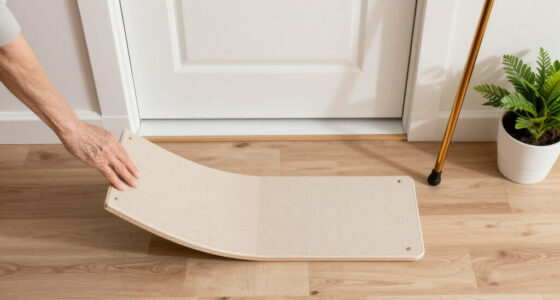
A properly fitted threshold ramp can bridge an uneven lip; it must be stable, gradual, and slip-resistant.
| Feature | Standard walker | Adjustable / foldable | Compact walker |
|---|---|---|---|
| Typical width | 20–25 inches | 18–22 inches, model-dependent | 16–20 inches, model-dependent |
| Typical weight | About 7–10 lb | About 6–8 lb | About 5–7 lb |
| Tight-space fit | ~ Measure carefully | ✓ Adaptable | ✓ Slim profile |
| Storage | ✗ Limited | ✓ Folds readily | ✓ Small footprint |
| Best question | Does it fit every route? | Is it stable when fully deployed? | Does the narrower base still suit me? |
Build control before the doorway
Practice in an open, level area with a helper nearby. Use chairs or boxes to suggest a corridor, but keep them soft, stable, and far enough apart to avoid trapping the walker.
Three progressive drills
Common doorway questions
Fit is personal. Walker dimensions, balance needs, flooring, door swing, and nearby turning room all influence which solution is safest.
Is my doorway wide enough?
Measure the narrowest clear opening with the door fully open. Compare it with the walker’s widest point and allow practical side clearance.
Which walker suits narrow spaces?
A stable, correctly fitted adjustable or compact model may help. Confirm usable width—not only folded storage width—with a mobility professional.
Can accessories be removed?
Removable baskets or trays may recover width, but only detach components according to the manufacturer’s instructions and restore them securely.
When should I ask for help?
Get assistance if the walker catches, the threshold is unstable, balance feels uncertain, or the route requires lifting, twisting, or unsupported side-stepping.
DR
Measure the real opening, remove obstacles, use a fully opened and stable walker, and practice the route slowly. If the fit remains marginal, change the environment or equipment—not your safety margin.
How to Measure Your Doorways and Walker for a Perfect Fit
Getting a walker through a doorway starts with accurate measurements. Measure the width of your doorway at its narrowest point—don’t rely on the frame alone, check the clearance at the handle height and the floor. Use a tape measure for precision, and add a couple of inches for safety.
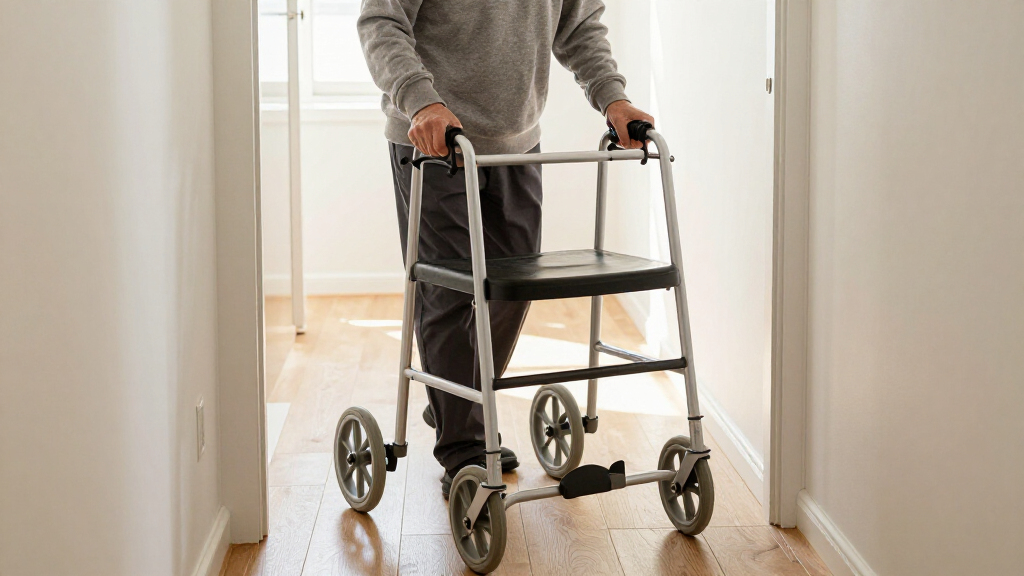
Next, measure your walker’s width, including any attachments like baskets or trays. Standard walkers are about 20-25 inches wide, but adjustable models can be narrowed down to 18 inches or less. Knowing these numbers helps you plan your approach or consider modifications if needed.
For example, if your doorway is only 30 inches wide but your walker is 24 inches, you’ll need to find ways to narrow the space or adjust the walker for easier passage.
adjustable foldable walker for narrow doorways
As an affiliate, we earn on qualifying purchases.
As an affiliate, we earn on qualifying purchases.
Simple Techniques to Maneuver Your Walker Through Tight Spaces
Here’s a straightforward plan: turn your walker sideways to slide it through narrow doorways. When space is tight, tilt the walker slightly, then gently rotate it at an angle to get through. Think of it like turning a wide shopping cart through a narrow aisle—angle is your friend.
Another trick: fold or remove parts of your walker if possible. Many models have quick-release wheels or removable baskets that can shave a few inches off width temporarily.
For example, a caregiver might tilt the walker at a 45-degree angle and gently push it through a 28-inch doorway—it’s all about controlling the tilt and angle for a smooth pass.
As an affiliate, we earn on qualifying purchases.
Environmental Changes That Make Passing a Walker Easier
Sometimes, it’s not just about your skills—your environment plays a big role. Widen doorways by installing jamb extenders, which add an extra inch or two. Removing door stops or hinges that stick out can create more room.
Clear clutter, move furniture, and remove rugs that might trip you or block your path. If thresholds are high or uneven, ramps or threshold ramps can make a world of difference, smoothing out the transition for your walker.
Imagine a small ramp placed over a 2-inch step—suddenly, your walker slides right across without a hitch. These quick fixes keep you moving safely and comfortably.
As an affiliate, we earn on qualifying purchases.
Latest Innovations Making Navigation Easier
Today’s walker designs are leaning toward slimmer profiles and smarter features. Some models now fold narrower and have adjustable widths at the push of a button. These innovations make squeezing through tight spots a lot less stressful.
For example, a new lightweight walker with a telescoping frame can reduce its width from 22 inches to 18 inches instantly. Plus, some models come with quick-release components, so you can adapt your walker on the fly.
Materials like lightweight aluminum or carbon fiber keep the weight down, making it easier to handle in tight spaces—less strain, more control.
lightweight portable walkers for tight spaces
As an affiliate, we earn on qualifying purchases.
As an affiliate, we earn on qualifying purchases.
Measuring and Choosing the Right Equipment for Your Home
Getting a walker through doorways depends on selecting the right model and size. Use your measurements to compare options, focusing on adjustable or foldable walkers. Remember, a narrower, lighter walker isn’t just easier to get through tight spots—it’s also safer and less tiring to handle.
Here’s a quick comparison:
| Feature | Standard Walker | Adjustable/Foldable Walker | Compact Walker |
|---|---|---|---|
| Width | 20-25 inches | 18-22 inches, adjustable | 16-20 inches, foldable |
| Weight | around 7-10 lbs | lighter, around 6-8 lbs | lightweight, 5-7 lbs |
| Ease of Storage | Limited | Good, folds easily | Excellent, folds to fit in small spaces |
Choosing the right equipment is crucial because an ill-fitting walker can lead to increased difficulty, fatigue, or even accidents. A narrower, lightweight model reduces the effort needed to maneuver and lessens the risk of tipping or getting stuck. Proper measurements and understanding your home’s spatial constraints help you select a device that complements your environment, promoting safer, more confident movement.
How to Practice and Build Confidence in Tight Spaces
Getting your walker through narrow doorways takes a bit of practice. Start in an open space with plenty of room. Practice turning, tilting, and reversing your walker to build confidence.
For example, set up a makeshift corridor with chairs or boxes just narrower than your walker. Practice sliding it through, adjusting your grip, and turning at different angles. Over time, these small drills become second nature. Recognizing the importance of these exercises is essential because they help you understand your limits, improve your technique, and reduce the risk of accidents when navigating real-world tight spots. Consistent practice enhances your spatial awareness and control, making everyday movements more instinctive and safer.
Remember: safety first. Keep your path clear, and consider asking a friend or caregiver to watch and give tips as you try new maneuvers.
Frequently Asked Questions
How do I determine if my doorways are wide enough for my walker?
Use a tape measure to check the narrowest part of your doorway—measure both the width and height clearance. Add at least an inch or two for safety. If your walker is wider than the space, consider modifications or a narrower model.
Adjustable or foldable walkers are ideal because they can be narrowed for tight spots. Lightweight models with slim profiles are easier to handle and less likely to get stuck.
Can I modify my home to better accommodate my walker?
Yes. Installing jamb extenders, removing unnecessary door stops, and adding threshold ramps are simple ways to widen doorways and smooth out transitions. These small changes can make a big difference in safety and ease of movement.
How do I practice getting my walker through tight spaces safely?
Start in a spacious area with obstacles mimicking narrow doorways. Practice tilting, turning, and reversing your walker at different angles. Always have someone nearby to assist and ensure your environment is clutter-free to prevent accidents.
Conclusion
Getting your walker through doorways and tight spaces is mostly about preparation, technique, and sometimes a few simple tweaks at home. With the right approach, you can keep your independence and move safely through your cozy, country home.
Think of it like guiding a gentle horse through a narrow trail—patience, awareness, and a little cleverness make all the difference. Keep practicing, stay safe, and enjoy the comfort of your own space.
Halloween Picks
halloween
As an affiliate, we earn on qualifying purchases.