TL;DR

Turn quiet afternoons into listening time
- Thousands of audiobooks, podcasts and originals
- Listen on your phone, tablet or Echo — also offline
- Cancel anytime
Getting up from a chair safely depends on good technique, strength, and awareness of your environment. Simple adjustments and exercises can make a big difference in preventing falls and boosting confidence.
Rising from a chair might seem simple, but for many older adults, it’s a moment of vulnerability. A brief wobble, a near-fall, or a feeling of instability can happen in the blink of an eye. The good news? With a few mindful adjustments and simple exercises, you can stay steady and safe every time.
In this guide, you’ll learn how to use proper technique, make your environment safer, and build strength—so getting up feels as natural as settling in. Whether you’re recovering from an injury or just want to stay confident in your daily routines, these tips will help you move with control and peace of mind.
Use a controlled, deliberate technique—lean forward, push through your heels, and pause at the top of each rise.
Choose supportive, stable furniture with armrests, and make environmental adjustments like bright lighting and clutter removal.
Strengthen your legs with simple exercises like sit-to-stands and balance drills to boost confidence and stability.
Always stand slowly, and if unsteadiness or dizziness occurs, sit back down and seek professional advice.
Small changes in your home setup and regular practice can dramatically reduce your fall risk when getting up from a chair.
Staying Steady When Getting Up from a Chair
A safe rise is a controlled transfer of weight—not a race. Good technique, supportive furniture, a clear environment and regular strength practice can reduce wobbling and help every movement feel more confident.
A smoother rise, step by step
Set up first, shift your weight deliberately and let your legs do the work. Moving slowly gives your muscles and balance systems time to coordinate.
Move forward
Sit upright near the front of a firm chair. Avoid perching so far forward that you feel unstable.
Plant both feet
Keep feet flat, hip-width apart and slightly behind the knees. Secure footwear improves grip.
Lean forward
Keep your back long and bring your nose over your toes to shift weight above your feet.
Push and rise
Press through both feet—or safe armrests—and straighten your hips and knees gradually.
Pause upright
Stand still for several seconds. Begin walking only when dizziness and swaying have settled.
Make the chair—and the room—work for you
Lower, softer seats demand more leg strength and joint motion. Small changes to furniture and surroundings can remove unnecessary difficulty.
Choose firm support
A stable chair with a firm seat and armrests provides leverage. A correctly fitted firm cushion may raise a low seat.
Stop movement
Avoid chairs with wheels or rocking bases. The chair should not slide when you shift forward or push through your arms.
See the whole path
Use bright, even lighting and nightlights. Clear visual cues help the brain judge position, distance and obstacles.
Remove trip hazards
Clear clutter and cords. Remove loose rugs or secure them with suitable non-slip backing or adhesive strips.
Keep a secure grip
Wear well-fitting shoes or slippers with supportive backs and non-slip soles. Avoid standing on slippery socks.
Use stable contact
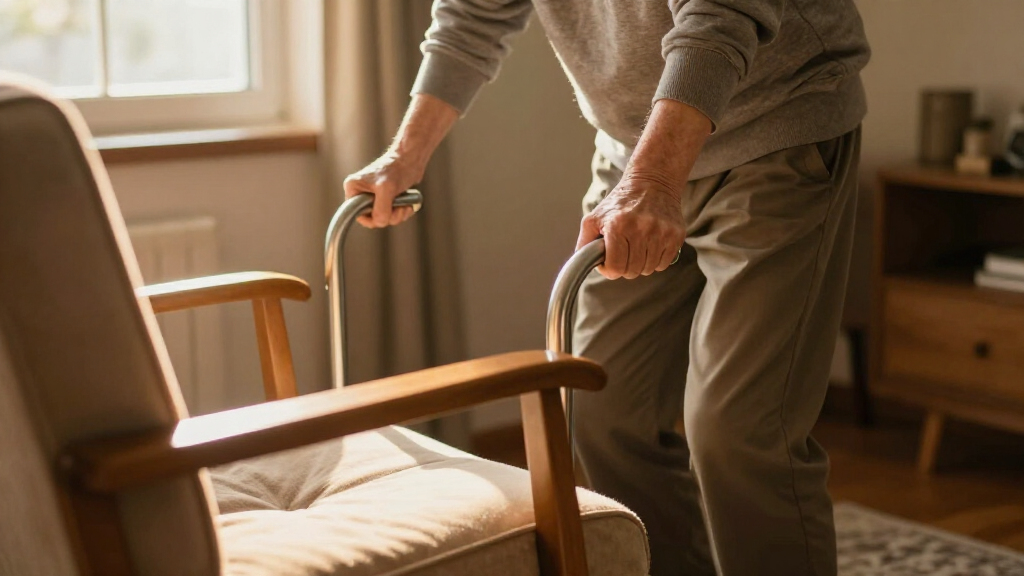
Armrests can improve safety. Do not pull on a towel rail, light table or walking frame unless taught a safe method.
| Feature | Safer choice | Why it helps | Watch for |
|---|---|---|---|
| Seat surface | ✓ Firm and level | Transfers more effort directly into the rise | ~ Deep or sinking cushions |
| Seat height | ✓ Hips near or above knees | Requires less strength and joint motion | ✗ Very low seating |
| Arm support | ✓ Fixed armrests | Adds safe leverage when needed | ✗ Unstable nearby objects |
| Chair base | ✓ Four stable feet | Keeps the support surface predictable | ✗ Wheels or rocking motion |
| Path ahead | ✓ Bright and clear | Reduces distraction, slips and trips | ~ Rugs, cords and dim light |
Train the systems behind a steady rise
Chair-rise ability reflects more than leg power. Balance, joint mobility, sensation, vision, attention and blood-pressure regulation all contribute.
Exercises should be matched to your ability and medical conditions. Use hand support or a higher chair when needed; using your hands is not a failure.
Quality before quantitySit-to-stands
Rise and lower with control from an appropriate chair. Adjust seat height and hand support to stay safe.
Heel raises
Holding stable support, lift and lower the heels slowly to train calf strength and upright control.
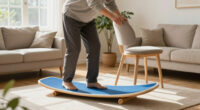
Balance drills
Use clinician-approved standing, stepping or walking practice near reliable support.
When unsteadiness needs attention
Sit back down if you feel dizzy or unsafe. Repeated symptoms can be linked to dehydration, medication effects, blood-pressure changes, inner-ear problems, neuropathy, arthritis or muscle weakness.
Orthostatic blood-pressure drop
Orthostatic hypotension is generally identified by a sustained fall in blood pressure within three minutes of standing:
Symptoms can occur without reaching these thresholds, and measurable drops can occur without symptoms. A clinician should interpret readings alongside symptoms, health history and medication use.
Small adjustments compound
A safer setup supports better movement; better movement enables useful practice; consistent practice helps preserve confidence and independence.
Five steady habits
Safety improves most when technique, surroundings, physical capacity and health concerns are addressed together.
Prepare before moving. Sit near the edge, place both feet securely and pause if you feel lightheaded.
Use a deliberate technique. Lean forward, push through both feet and straighten gradually.
Choose dependable support. Prefer a firm, stable chair with armrests and avoid pulling on movable objects.
Stabilize before walking. Stand still for several seconds and make sure dizziness or swaying has passed.
Act on recurring symptoms. Falls, fainting, persistent dizziness or worsening weakness warrant professional assessment.
How to Rise from a Chair Without Wobbling
Standing up safely starts with a clear, deliberate technique. Your goal? Use your legs, not your back, and move slowly. For example, sit upright, lean forward slightly so your nose is over your toes, then push through your heels to stand. Pause for a second, and then sit back down with control.
Think about this movement as a controlled transfer of weight—like shifting gears smoothly in a car. When you rush, your muscles may not engage properly, increasing wobbling and the chance of losing your balance. Moving deliberately allows your muscles to coordinate better, reducing strain and lowering fall risk. Practicing this can also build muscle memory, so the motion becomes more automatic, even when you’re tired or unsteady.
Here’s a simple step-by-step:
- Sit near the front of the chair, feet flat and hip-width apart.
- Lean forward, keeping your back straight, so your nose moves over your toes.
- Push through your heels, straighten your hips and knees slowly.
- Pause briefly at the top to steady yourself.
- Reverse the motion, sitting down with control.
As an affiliate, we earn on qualifying purchases.
Choosing the Right Chair and Support for Safety
Your chair’s stability and supportiveness are crucial because they directly influence how easily and safely you can stand. A sturdy, firm chair with armrests provides a solid base, helping distribute weight evenly and giving you leverage for pushing up. Soft or low sofas can be more challenging because they lower your hips and absorb some of your effort, making it harder to generate the necessary force to stand without wobbling.
Think of your chair as a tool that should assist your movement, not hinder it. The right support can compensate for minor weaknesses or fatigue, reducing the likelihood of losing balance. When selecting a chair, consider its height—if it’s too low, standing becomes harder; if it’s too soft, your hips may sink, making the push-off less effective. Using armrests isn’t just a convenience—it’s a safety feature, providing extra leverage and reducing the strain on your legs and back.
For instance, if your favorite armchair has a soft cushion, placing a firmer pillow underneath can raise the seat height and firm up the support. This small adjustment can significantly improve your ability to stand confidently, especially if you have joint pain or muscle weakness.
balance and strength training exercises for seniors
As an affiliate, we earn on qualifying purchases.
As an affiliate, we earn on qualifying purchases.
Environmental Tweaks That Keep You Steady
Your surroundings play a vital role in your ability to rise safely. Poor lighting, clutter, and loose rugs are common hazards because they can cause distractions or unexpected slips—especially when your balance is already compromised. Bright, even lighting helps your eyes and brain process spatial cues more effectively, reducing the risk of missteps. Clear pathways free of clutter allow for smooth, confident movement, minimizing the chance of catching your foot or tripping.
Removing loose rugs and cords prevents slipping and tripping hazards. Using non-slip mats or adhesive strips on rugs can provide extra grip. Additionally, installing nightlights in hallways and near the bathroom creates consistent visual cues, helping your brain orient itself when lighting is dim. These small environmental adjustments are simple but impactful because they directly influence how your body perceives space and balance, especially in low-light conditions or unfamiliar settings.
Imagine walking into your kitchen at dusk—bright enough to see every step, the floor clear, and your favorite chair waiting in a well-lit corner. These small yet intentional changes support your confidence, making each rise a safe, controlled action instead of a risky maneuver.
stability assistive devices for standing
As an affiliate, we earn on qualifying purchases.
As an affiliate, we earn on qualifying purchases.
Strengthening Your Legs and Improving Balance
Building leg strength and enhancing balance aren’t just about muscle—they’re about creating a foundation of stability that supports every movement. When your legs are strong and your balance is improved, you’re less likely to wobble or fall, especially when rising from a seated position. Exercises like sit-to-stand repetitions, heel raises, and standing on one foot target key muscles involved in these movements, promoting muscle endurance and proprioception—the sense of your body’s position in space.
Practicing controlled sit-to-stand movements regularly helps your nervous system coordinate muscle activation smoothly. This not only improves strength but also trains your brain to execute the motion confidently, even when your muscles are tired or your environment is less predictable. Gradually increasing repetitions or adding slight variations can further challenge your stabilization muscles, reinforcing your safety net.
Think of this process as tending a garden—consistent, gentle efforts cultivate resilience and confidence. Over time, these exercises make your legs more resilient, your movements more deliberate, and your overall stability much more secure, reducing the likelihood of sudden wobbles or falls during daily routines.
As an affiliate, we earn on qualifying purchases.
When to Get Help — Signs You Should Not Ignore
If getting up feels unstable, or you experience dizziness, weakness, or fainting, it’s time to see a healthcare professional. Persistent unsteadiness may signal underlying issues like blood-pressure drops, medication effects, or nerve problems. Ignoring these signs can increase your risk of falls, which can lead to serious injuries or loss of independence.
For example, if you stand and feel a sudden wave of dizziness that doesn’t pass, or you’ve had a fall recently, don’t wait. A thorough assessment can identify underlying causes—such as blood pressure irregularities, medication side effects, or neurological issues—and help develop a tailored plan to improve your safety. Addressing these issues early can prevent future falls and maintain your mobility and confidence longer.
Remember, feeling safe when moving around at home is essential for your independence. Trust your instincts—if something feels off or different from usual, seek professional help promptly. Your safety isn’t just about avoiding falls; it’s about preserving your quality of life and autonomy.
Frequently Asked Questions
Why do I feel dizzy when I stand up?
Most often, dizziness on standing comes from a temporary drop in blood pressure, dehydration, or medication effects. If it’s frequent or severe, it’s wise to get checked by a healthcare provider to rule out underlying causes.
How can I improve my balance when getting up?
Practicing slow, controlled sit-to-stand exercises, strengthening leg muscles, and making environmental changes like better lighting and removing clutter can all help improve your balance and confidence.
Is it better to stand slowly or quickly?
Standing slowly and deliberately is safest. Moving gradually allows your body to adjust and prevents that brief wobble or dizziness. Always pause and ensure you feel steady before walking.
Can I push off with my hands?
Yes, especially from armrests or stable supports. Using your hands can help lift with less strain and reduce the chance of losing balance. Just be sure the support is sturdy.
What if my chair is too low or soft?
A low or soft chair can make rising harder. Using a firmer cushion or raising the seat height with a sturdy block or cushion can make a big difference in your safety and ease of moving.
Conclusion
Staying steady when rising from a chair isn’t about strength alone. It’s about combining good habits, supportive surroundings, and gentle exercises. Think of each rise as a moment of grace—deliberate, controlled, and confident.
Remember, your independence depends on your ability to move safely. Keep practicing, stay aware, and don’t hesitate to ask for help when needed. Your comfort and safety are worth every effort.
Columbus Day / Indigenous Peoples' Day Picks
long weekend sales
As an affiliate, we earn on qualifying purchases.