
TL;DR

Turn quiet afternoons into listening time
- Thousands of audiobooks, podcasts and originals
- Listen on your phone, tablet or Echo — also offline
- Cancel anytime
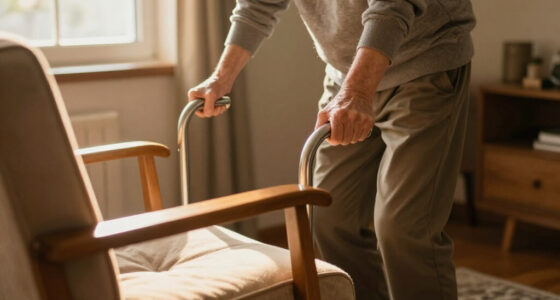
A paper in The Lancet Healthy Longevity argues that sarcopenia and mobility loss in older adults should be understood as problems involving the full motor system, not muscle alone. The authors propose changes to screening and research, but say the suggested measures have not yet been shown to improve outcomes or reduce costs.
A paper published in The Lancet Healthy Longevity argues that weakness and mobility loss associated with aging should not be treated as muscle problems alone. The authors propose viewing sarcopenia as a disorder of the wider motor system—including the brain, spinal cord, nerves and muscles—and call for changes to diagnostic criteria, clinical assessment and research.
The authors say muscle loss accounts for only a modest share of the decline in strength seen in older adults. People with similar amounts of muscle can have different levels of strength and mobility, they write. The paper also points to a gap between increasing muscle mass and improving everyday function: some drug and protein approaches can build muscle but have produced disappointing gains in what people can do, while exercise can improve strength and mobility without a measurable increase in muscle mass.
The proposed explanation is that aging affects the motor system as a whole. The authors describe changes in how movement is planned, how reliably and strongly signals travel through nerves, and how balance and awareness of body position function. In their account, muscle may remain, but less effective signaling can limit how well it is recruited for movement.
The paper suggests clinicians continue measuring strength and walking speed while also observing tasks such as rising quickly from a chair, maintaining steadiness during effort, using the hands for precise movements and walking while talking. It says weakness that is asymmetric, rapid or out of proportion to muscle loss may warrant closer examination. The authors also identify review of sedative and anticholinergic medicines as part of considering factors that can blunt motor drive.
A Broader View of Mobility Loss
The proposal could shift attention from muscle size alone toward the systems that enable a person to move, with implications for screening, treatment and research funding. If the framework is supported by further evidence, clinicians may have more ways to identify why an individual is losing strength and tailor care beyond approaches focused mainly on building muscle.
The issue has practical importance because sarcopenia is associated with frailty, disability and loss of independence. Medical Xpress reports that falls remain the leading cause of injury-related hospitalization and death in Australia. It cites 253,800 fall-related hospitalizations in 2024–25, 6,722 deaths after falls in the preceding year, and an estimated $5.4 billion in health-system costs from fall injuries. Those figures describe the Australian burden; they do not establish that the paper’s proposed approach would reduce falls or costs.
The authors’ argument is a proposed reframing, not proof that existing muscle-focused care should be abandoned. Its value will depend on whether broader assessments identify meaningful problems and whether treatments guided by them improve mobility and daily function.
Products Worth Considering

HOOYEAH 6 x 6 ft Walk-In Polycarbonate Greenhouse

AMERLIFE 34 x 10 x 7 ft Walk-In Tunnel Greenhouse with Watering System

EAGLE PEAK 8 × 6 ft Walk-In Pop-Up Greenhouse, Green and White
As an affiliate, we earn on qualifying purchases.
From Muscle Mass to Function
The diagnosis of sarcopenia has already moved beyond measuring muscle mass alone. According to the paper’s authors, grip strength, gait speed and chair-stand performance are now central because they predict outcomes such as falls, disability and death better than muscle mass does. They argue that diagnostic practice has changed more than the explanation of the condition: sarcopenia is still commonly described as a disease of muscle.
In Australia, the Australian Journal of General Practice published a proposed algorithm earlier in 2026 to guide primary-care screening, assessment and management of poor muscle health. The new paper, by Lucas B. R. Orssatto and colleagues, extends that discussion by asking whether the underlying model should account for the nervous system and movement control as well as muscle. The work appeared in The Lancet Healthy Longevity under the title “Reframing sarcopenia as a disease of the ageing motor system.”
““Muscle loss explains only a modest proportion of the strength decline seen in older adults.””
— The paper’s authors
Evidence Still Needed in Clinics
The authors acknowledge that the additional measures they suggest have not been shown to outperform existing screening on patient outcomes or cost. The paper also notes that access to neuromuscular expertise is uneven in primary care. It does not establish that the proposed tests will predict falls better, identify the cause of weakness more accurately, or lead to more effective treatment.
It remains unclear which practical measures would be reliable and feasible across different clinics, or how clinicians should weigh motor-system findings against muscle assessments. The reported Australian fall statistics provide context for the public-health burden, but they do not show that this proposed framework would prevent falls. The source material does not describe a clinical trial testing the new assessment approach.
Testing the Proposed Assessment
The authors call for international groups responsible for sarcopenia diagnostic criteria to consider a broader motor-system framework. They also seek validation of practical clinical tests, guidelines that support a staged assessment, and trials that measure effects on nerves as well as muscle.
Those steps would help establish whether the added observations can be used consistently in primary care and whether they change care or outcomes. Until that evidence is available, the paper is best understood as a research and diagnostic agenda—not a replacement for current screening or individualized clinical assessment.
Key Questions
What does the paper mean by the motor system?
It refers to the systems involved in producing movement, including the brain, spinal cord, nerves and muscles, as well as functions such as balance and awareness of body position.
Does the paper say muscle loss is unimportant?
No. The authors argue that muscle loss is only part of the explanation for weakness and mobility changes. Their proposal is to assess the wider motor system too, not to disregard muscle health.
What assessments do the authors suggest?
Alongside strength and walking speed, they suggest observing how quickly a person rises from a chair, steadiness during effort, hand dexterity and walking while talking. These additional measures still need validation.
Has the proposed approach been shown to prevent falls?
No. The paper does not establish that its proposed assessments or framework prevent falls. The authors say the measures have not yet been shown to improve outcomes or reduce costs compared with existing screens.
Source: medicalxpress.com