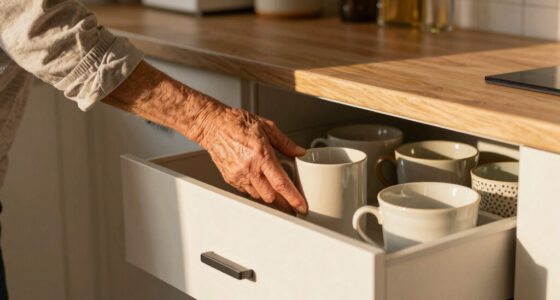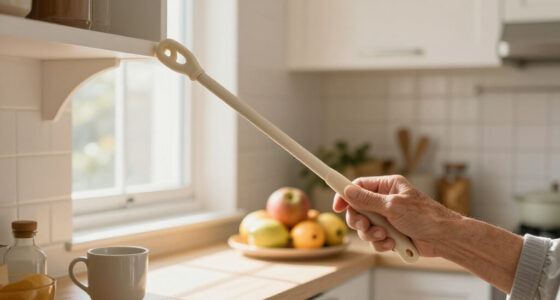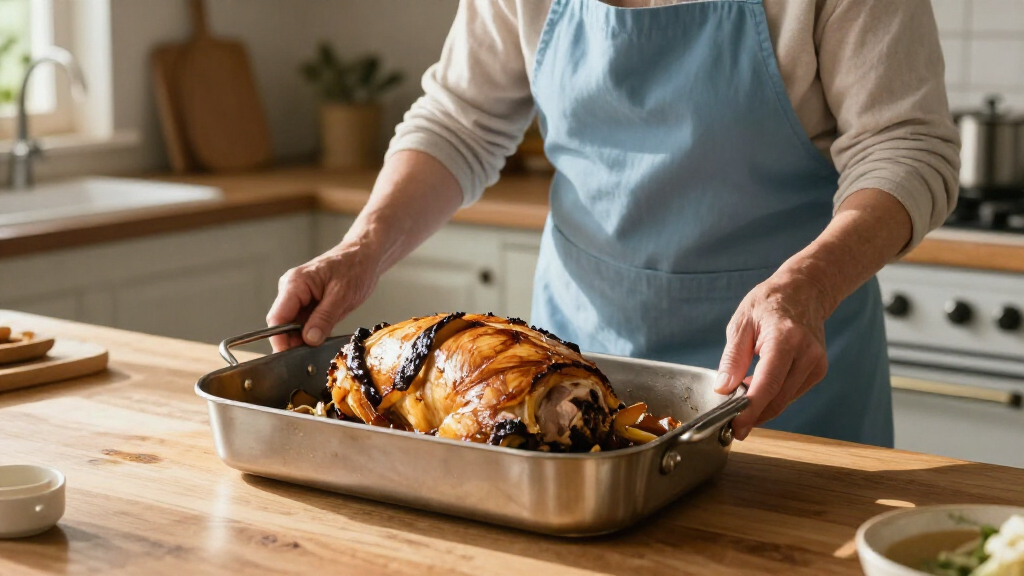

Choosing a comfortable kitchen roasting pan is about more than the handles: weight, grip, cleanup and how often you make gravy all affect whether a pan feels easy to use. The practical choice is usually a stainless steel roasting pan with a rack or a nonstick roasting pan with a rack. Stainless steel takes more care but tolerates regular use and supports browning and pan sauces; nonstick releases sticky foods with less scrubbing, though its coating calls for gentler tools and handling. Choose stainless for durability and cooking flexibility, or nonstick if easy release and cleanup matter most.

Turn quiet afternoons into listening time
- Thousands of audiobooks, podcasts and originals
- Listen on your phone, tablet or Echo — also offline
- Cancel anytime

Cuisinart Chef’s Classic 16-Inch Stainless Steel Roasting Pan with Rack
- ✔ Material: Stainless steel with aluminum-encapsulated base
- ✔ Dimensions: 20.7 x 12 x 4.9 inches
- ✔ Weight: 7 pounds

Glad Nonstick Roasting Pan with V-Shaped Rack, 15 x 10.3 Inches
- ✔ Material: Carbon steel
- ✔ Finish: Nonstick
- ✔ Dimensions: 15 x 10.3 x 2.8 inches, excluding handles
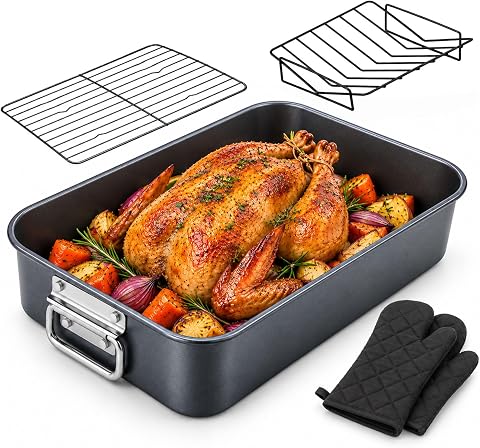
Tozaroa Carbon Steel Turkey Roasting Pan with 2 Racks and Oven Mitts
- ✔ Material: Carbon steel and stainless steel
- ✔ Thickness: 0.5 mm
- ✔ Dimensions: 15 x 11 inches
At a Glance
| Criteria | Stainless steel roasting pan with rack | Nonstick roasting pan with rack | Winner |
|---|---|---|---|
| Lifting and handling | Often heavier; wide, secure handles help when lifting a loaded pan. | May be lighter; handle shape and grip still matter when the pan is full. | Depends |
| Food release | Food may stick, especially if the pan is not preheated or adequately greased. | Coating helps food release, which can make delicate or sticky roasts easier to lift. | B |
| Browning and pan sauces | Strong choice for browning drippings and making pan sauces on the stovetop, if the pan is stovetop-safe. | Browning and pan-sauce use can be more limited; follow the maker’s stovetop and temperature guidance. | A |
| Cleanup | May need soaking or scrubbing when drippings bake on. | Usually easier to wipe clean, especially after food releases well. | B |
| Durability | Typically resists wear from utensils and repeated use better than a coated pan. | Coating can scratch or degrade, shortening useful life if mishandled. | A |
| Care requirements | Usually tolerates metal utensils; check the manufacturer’s instructions for oven and stovetop limits. | Use nonmetal utensils and follow care and temperature limits to protect the coating. | A |
| Value over time | Higher initial price can pay off for frequent roasting and long service life. | Can be a good purchase for occasional cooks who value easier cleanup over long-term ruggedness. | Depends |
Cuisinart Chef’s Classic 16-Inch Stainless Steel Roasting Pan with Rack
For buyers who want one roasting pan to handle a range of cooking setups, the Cuisinart Chef’s Classic is the most complete option here. Its removable stainless steel rack lifts food above the drippings, while the pan collects them below; compared with the fixed V-shaped rack on Glad, this arrangement is easier to remove when we want the pan itself for vegetables or to collect juices. The aluminum-encapsulated base is intended to promote even heating, and induction compatibility gives this model a cooktop use that Glad and Tozaroa do not list.Its riveted stainless steel handles provide a solid grip point, but comfort has limits: the pan weighs 7 pounds empty, and the handles become hot in the oven. We should plan to use oven mitts and account for the added weight when lifting a full roast. At 20.7 by 12 inches overall, it also asks for more oven and storage space than the two 15-inch options. Care instructions allow dishwasher use but recommend hand-washing, and the finish may be marred or chipped by dishwasher loading. We would choose Cuisinart over Glad when stovetop flexibility and a larger roasting surface matter more than fuss-free cleanup; buyers who value low-effort nonstick care should consider Glad instead.
Pros:
- Removable rack elevates food and can be taken out when needed.
- Induction-compatible base adds cooktop versatility.
- Oven-safe up to 500°F, the highest stated limit in this lineup.
- Riveted stainless steel handles offer defined grip points.
Cons:
- At 7 pounds empty, it is the heaviest option listed.
- Oven-hot handles require mitts, and hand-washing is recommended to protect the finish.
- Its larger dimensions need more oven and cupboard space.
Best for: Home cooks who want a larger, induction-compatible roasting pan with a removable rack and sturdy riveted handles.
Not ideal for: Anyone who prioritizes a light pan, compact storage, or carefree dishwasher cleaning.
Bottom line: We recommend the Cuisinart for the broadest range of roasting and cooktop use, provided its weight and more careful cleaning suit our routine.
“We recommend the Cuisinart for the broadest range of roasting and cooktop use, provided its weight and more careful cleaning suit our routine.”
Glad Nonstick Roasting Pan with V-Shaped Rack, 15 x 10.3 Inches
The Glad Nonstick Roasting Pan is the most appealing choice when an uncomplicated release and cleanup matter more than using the pan across different heat sources. Its V-shaped rack is designed to improve airflow around food, and the nonstick finish helps roasted items lift away with less sticking. Compared with Cuisinart’s stainless steel surface, this should mean less scrubbing after a roast, and the supplied care details say the pan is dishwasher safe.That convenience comes with a more specific job description. Glad is not for stovetop, broiler, or open-flame use, and its 464°F oven limit sits below Cuisinart’s 500°F ceiling. The 15-by-10.3-inch body is also more compact than the Cuisinart, which can help with storage but constrains the size of a roast or batch of vegetables. Its 3.2-pound listed weight is easier to manage than Cuisinart’s 7 pounds, though we still need a secure hold when carrying food and hot drippings. The care guidance also rules out metal utensils and abrasive cleaners, so the nonstick surface calls for gentler handling. Choose Glad for straightforward oven roasting and easier release; choose Tozaroa if having two rack styles and included mitts is more useful than the simpler setup.
Pros:
- Nonstick coating supports easier food release and cleanup.
- V-shaped rack is designed to increase airflow around the roast.
- At 3.2 pounds, it weighs less than the Cuisinart listed here.
- Dishwasher-safe care is specified.
Cons:
- Cannot be used on a stovetop, under a broiler, or over an open flame.
- 464°F maximum is lower than Cuisinart’s stated oven limit.
- Nonstick care guidance advises against metal utensils and abrasive cleaners.
Best for: Cooks who want a compact oven-only pan with nonstick food release and a dishwasher-safe care option.
Not ideal for: Those who need stovetop or broiler use, routinely roast large items, or prefer metal utensils and abrasive scrubbing tools.
Bottom line: We’d pick Glad for easy-release oven roasting in a compact footprint, as long as its heat-source limits fit our cooking habits.
“We’d pick Glad for easy-release oven roasting in a compact footprint, as long as its heat-source limits fit our cooking habits.”
Tozaroa Carbon Steel Turkey Roasting Pan with 2 Racks and Oven Mitts
The Tozaroa’s standout advantage is what comes in the set: a flat rack, a V-shaped rack, and two oven mitts. That gives us more ways to position different foods than Glad’s single V-shaped rack, and the mitts are a practical addition for handling a hot pan. Its deep design is intended to help contain juices and sauces, and the listing describes the pan for roasting as well as casseroles and desserts. For a kitchen starting without a roasting setup, the bundled pieces may make this a convenient starting point.But included accessories do not resolve the main questions about the pan itself. The stated 0.5 mm carbon steel thickness sounds relatively light compared with buyers seeking a substantial, rigid roasting vessel; the provided details do not establish how it behaves under a heavy load. Its 15-by-11-inch size is close to Glad’s footprint and smaller than Cuisinart’s, so a large bird may be a tight fit. Tozaroa’s nonstick surface is listed as dishwasher safe, though the supplied information does not give an oven temperature ceiling or state cooktop compatibility. Compared with Glad, it offers rack choice and mitts; compared with Cuisinart, it gives up the listed induction compatibility and lifetime warranty. We’d choose it when the accessories and flexible rack arrangement are the priority, while cooks who want a more clearly specified, heavier-duty pan should look at Cuisinart.
Pros:
- Includes both flat and V-shaped racks for different roasting setups.
- Two oven mitts are included for handling hot cookware.
- Deep sides are intended to contain juices and sauces.
- Listed for roasting and baking uses.
Cons:
- Stated 0.5 mm steel thickness may feel less substantial than a heavier pan.
- 15-by-11-inch dimensions may limit roast size.
- The supplied specifications do not state a maximum oven temperature or cooktop compatibility.
Best for: Buyers who want two rack configurations and included mitts in a compact roasting-and-baking set.
Not ideal for: Those who need a larger pan for a big turkey, a clearly specified high-temperature limit, or a substantial heavy-gauge feel.
Bottom line: We’d choose Tozaroa for its useful rack and mitt bundle, while treating its compact size and thin stated steel as meaningful constraints.
“We’d choose Tozaroa for its useful rack and mitt bundle, while treating its compact size and thin stated steel as meaningful constraints.”
As an Amazon Associate we earn from qualifying purchases.
Key Differences
The biggest practical split is between low-effort release and long-term cooking flexibility. A nonstick surface helps food lift away with less sticking, which can make serving and cleanup feel easier after a busy meal. Stainless steel asks for more attention to preheating, fat and soaking, but its surface handles browning well and can turn browned drippings into a pan sauce. For cooks who roast often, those capabilities matter more than a quick wipe-down.
Comfort also depends on the loaded pan, not just its empty weight. A large roast, vegetables and accumulated juices can make either pan awkward. Wide, secure handles and a rack that keeps the roast stable matter more than a small difference in listed weight. Nonstick often wins for easier cleanup, but coating care adds rules; stainless steel is more forgiving with utensils and repeated use. Paying more for stainless makes sense when durability and sauce-making are priorities. A nonstick pan is better value when roasting is occasional and cleanup is the main source of frustration.
Detailed Comparison
Lifting and handling (moderate difference)
Neither material automatically feels comfortable when loaded: a roast and its juices add substantial weight. Nonstick pans are often lighter, which can make positioning easier, while stainless models can feel more solid. The gap is moderate and depends heavily on handle width, grip and balance. Choose the pan that gives you a secure two-handed lift, and check its dimensions and weight before buying.
Food release (Nonstick roasting pan with rack wins — moderate)
Nonstick wins by a moderate margin because the coating helps food separate from the pan, reducing the chance that browned bits or skin tear during serving. Stainless steel can release food well with suitable preheating and fat, but takes more attention. For sticky glazes or delicate foods, nonstick makes the task easier; for robust roasts, stainless is manageable.
Browning and pan sauces (Stainless steel roasting pan with rack wins — moderate)
Stainless steel wins by a moderate margin for cooks who want browned drippings for gravy or sauce. Those drippings can be loosened from a stovetop-safe pan, while nonstick surfaces are less suited to building fond and may have stricter stovetop limits. This is a meaningful difference if sauce is part of the meal, but minor if the pan goes from oven to table without further cooking.
Cleanup (Nonstick roasting pan with rack wins — moderate)
Nonstick wins by a moderate margin: food generally releases more readily, so washing usually takes less effort. Stainless may need soaking or scrubbing after sticky drippings bake on. The advantage matters after frequent or large meals, though care still matters: abrasive pads can damage many nonstick coatings, so easy cleanup does not mean unrestricted cleaning tools.
Durability (Stainless steel roasting pan with rack wins — major)
Stainless steel wins by a major margin for long-term ruggedness. It does not rely on a coating that can scratch or wear, so it is more tolerant of repeated use and metal utensils. Nonstick can serve well with careful handling, but its surface is more vulnerable. For a pan used often, stainless is usually the safer long-term purchase.
Care requirements (Stainless steel roasting pan with rack wins — moderate)
Stainless steel wins by a minor to moderate margin for forgiving care: it generally allows metal utensils and less delicate washing, subject to the product instructions. Nonstick needs gentler utensils and attention to maker-specified temperature limits to preserve the coating. That tradeoff is easy to manage for some cooks and an irritation for others.
Value over time (moderate difference)
This depends on use. Stainless often delivers better long-term value for frequent roasters because it can withstand heavier use and remains useful for browning and sauces. Nonstick can be the better value for occasional cooking if easy release prevents hassle and the pan’s lifespan suits your needs. The difference is moderate; compare construction, warranty and expected care alongside the purchase price.
Stainless steel roasting pan with rack: Pros and Cons
Pros:
- Durable surface suited to frequent use.
- Good for browning drippings and making pan sauces when stovetop-safe.
- More tolerant of metal utensils than coated cookware.
Cons:
- Food may stick without suitable preparation.
- Baked-on drippings can take more effort to clean.
- A full, heavy pan can be awkward; handle design matters.
Nonstick roasting pan with rack: Pros and Cons
Pros:
- Food tends to release more easily.
- Often faster to wipe clean after roasting.
- Can feel lighter to position before it is loaded.
Cons:
- Coating can scratch or wear over time.
- Requires gentler utensils and care.
- Less suited to browning drippings for pan sauces.
Who Should Choose What
Choose Stainless steel roasting pan with rack if:
- You roast often and want a pan that can handle regular use.
- You make gravy or pan sauces from browned drippings.
- You prefer a surface that is less sensitive to metal utensils and scrubbing.
Choose Nonstick roasting pan with rack if:
- You roast occasionally and want food to release with less effort.
- Quick cleanup matters more than browning drippings on the stovetop.
- You are comfortable using gentler utensils and following coating care instructions.
Skip both if: Skip both styles if neither feels secure when you lift it at the size you need. Prioritize broad, comfortable handles, manageable loaded weight and a rack that stays stable; consider a smaller pan if a large roast would be difficult to move safely.
Value for Money
Pay more for stainless steel if you roast frequently, want to make pan sauces, or expect the pan to take years of regular use. Its durability and flexibility can justify a higher upfront cost. For occasional roasts, nonstick may be better value when easier release and washing are the benefits you will notice most. Compare the actual build, rack, handles and care instructions: material alone does not guarantee comfortable handling or a good lifespan.
Final Verdict
For most cooks who want one roasting pan for regular use, stainless steel is the stronger long-term choice: it lasts well, supports browning and is less demanding about utensils. Choose nonstick if you roast less often and easier food release and cleanup are worth the added care needed to protect its coating. The deciding factor is whether you value cooking flexibility and durability more than a simpler wash. Before buying either, check that its handles are secure and comfortable with a loaded-pan lift in mind.
Frequently Asked Questions
Which roasting pan is easier to clean?
Nonstick is usually easier because food releases more readily. Stainless steel may need soaking or more scrubbing when drippings bake on.
Can I make gravy in a nonstick roasting pan?
Check the manufacturer’s instructions for stovetop use. Nonstick is generally less suited to browning drippings and making pan sauces than stainless steel, so cooks who make gravy often may prefer stainless.
Is stainless steel worth paying more for?
It can be worth the extra cost if you roast often, want to make pan sauces or value a durable surface. For occasional use focused on easy release and cleanup, a suitable nonstick pan may offer better value.
What makes a roasting pan comfortable to handle?
Secure, wide handles and balanced weight matter most, especially once the pan is loaded. Check the pan’s size and weight, and consider whether you can lift it safely with both hands.