TL;DR

Turn quiet afternoons into listening time
- Thousands of audiobooks, podcasts and originals
- Listen on your phone, tablet or Echo — also offline
- Cancel anytime
Starting a container garden on a small country porch is easier than you think. Focus on right-sized containers, suitable plants, and proper care to create a cozy, productive outdoor space. Small changes make a big difference in your gardening experience.
Imagine a tiny patch of green, bursting with vibrant herbs, blooming flowers, and fresh vegetables — all on your cozy porch. That’s the magic of a container garden, especially when space is tight but your love for nature is big. You don’t need a sprawling backyard to enjoy the simple pleasure of growing your own food or brightening your home with flowers.
In this guide, you’ll discover how to turn your small country porch into a lively, manageable garden. No fuss, just practical steps and friendly tips to help you succeed. Whether you’re new to gardening or just looking for easy ways to get started, this is your step-by-step plan for creating a charming outdoor nook that fits your life.
Choose lightweight, well-draining containers with proper drainage holes to prevent overwatering.
Select plants that match your porch’s sunlight and your local climate for easier success.
Use a high-quality potting mix combined with organic compost to keep your plants healthy.
Group containers close together and utilize vertical space to maximize a small porch.
Keep watering simple with self-watering containers or daily checks, and prune regularly to encourage lush growth.
How to Start a Container Garden on a Small Country Porch
A tiny porch can become a productive green nook with the right containers, climate-smart plants, balanced soil, and a simple care rhythm. Start small, place plants where the light is kind, and let herbs, flowers, and compact vegetables do the rest.
“The magic is not more space. It is smarter containers, better light, and a routine you can actually enjoy.”
Key InsightDirect sun supports most porch vegetables and flowers.
Water when the top inch of potting mix feels dry.
A practical pot size for herbs, blooms, and compact greens.
Every container needs drainage holes to protect roots.
Herbs, lettuce, and cherry tomatoes are porch favorites.
Hanging baskets and tiered stands multiply growing room.
Build the Porch Garden Foundation
Container gardening succeeds when each choice solves a real porch problem: weight, drainage, sunlight, wind, and daily care. These six decisions create the base for a cozy, low-fuss garden.
Choose light pots with drainage
Plastic, wood, or manageable ceramic containers are easier to move. Drainage holes prevent waterlogged roots, especially after summer storms.
Match plants to porch light
Use sunny corners for tomatoes, peppers, basil, and petunias. Save partial shade for mint, lettuce, ferns, or hostas.
Skip yard dirt entirely
A light potting mix with compost, perlite, and steady nutrients gives roots air, moisture, and reliable support.
Observe before arranging
Watch the porch morning, midday, and afternoon. Then place each container where its plant naturally wants to grow.
Make watering automatic-ish
Self-watering pots, a small can, or a daily reminder keeps care steady without making the garden feel like a chore.
Layer the porch vertically
Use hooks, shelves, rail planters, and tiered stands to create a lush garden without crowding the walkway.
Your 5-Step Porch Garden Flow
Move from container choice to daily care in a simple sequence. Each step makes the next one easier and prevents the most common container-garden frustrations.
Pick Pots
Choose lightweight containers with real drainage and enough depth for roots.
Read Light
Map sun, shade, and wind before committing plants to a spot.
Add Mix
Fill with potting mix plus compost or slow-release fertilizer.
Group Smart
Cluster compatible pots for warmth, humidity, and easy watering.
Maintain
Check moisture, rotate pots, prune growth, and catch pests early.
Small gardens can calm the day
Research links gardening with reduced stress and improved well-being, especially when plants are easy to care for and suited to the local climate.
Weather decides the setup
Use sheltered corners, windbreaks, and movable containers to adapt to rural wind, harsh sun, cool nights, or surprise rain.
What to Grow Where
Use this quick comparison to pair plant types with the porch conditions they prefer. The highlighted column shows the easiest small-porch fit.
| Choice | Small Porch Fit | Sun Need | Container Note | Care Load |
|---|---|---|---|---|
| Herbs: basil, thyme, mint | ✓ Excellent | Full to partial sun | 8-12 inch pots; mint prefers its own container | ✓ Low |
| Cherry tomatoes | ✓ Strong | Full sun | Deep pot, stake, and steady watering | ~ Medium |
| Lettuce and leafy greens | ✓ Excellent | Morning sun or partial shade | Wide shallow boxes work well | ✓ Low |
| Marigolds and petunias | ✓ Strong | Full to partial sun | Great for rail planters and hanging baskets | ✓ Low |
| Large squash or sprawling vines | ✗ Difficult | Full sun | Needs more width and heavier containers | ~ High |
Porch Conditions as Data
Think of the porch like a tiny climate map. A few practical measurements help you choose plants that will flourish instead of struggle.
The Watering Sweet Spot
Container soil dries faster than garden beds. The goal is neither soggy nor dusty: check the top inch, water deeply, and let excess drain away.
Trace the Porch-Garden System
Every thriving container garden is a connected chain. When one link improves, the whole porch feels easier to care for and more rewarding to use.
Pick the Perfect Containers That Make Gardening a Breeze
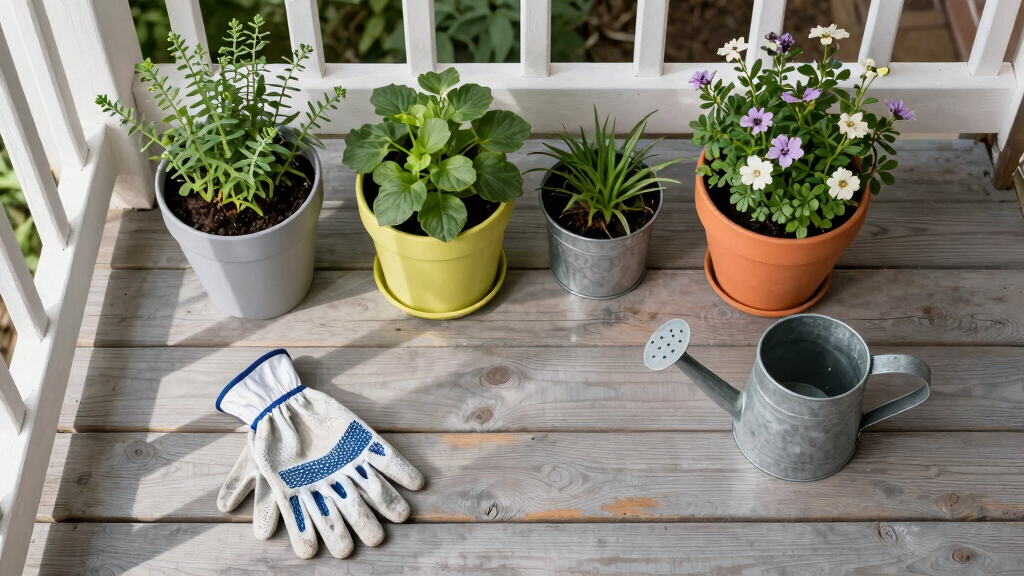
Choosing the right containers is the first step to a thriving porch garden. Look for lightweight options like plastic or wood that won’t strain your back. Make sure each has proper drainage holes — standing water can drown roots and cause trouble.
For example, a set of 12-inch ceramic pots with drainage can hold herbs or small flowers. If lifting heavy pots is a concern, consider self-watering containers that save you water and effort. The key is to match container size to your plants’ root needs — bigger for tomatoes, smaller for herbs.
Pro tip: Group containers close together to create a cozy, lush look, while also helping plants share warmth and humidity during cooler nights.
Products Worth Considering

Orbit B-hyve XR 8-Zone Indoor/Outdoor Smart Sprinkler Controller

EGO POWER+ 21 Cordless Electric Lawn Mower Kit, Self-Propelled

Orbit B-hyve Smart Indoor/Outdoor 12-Zone Sprinkler Controller
As an affiliate, we earn on qualifying purchases.
Choose Easy, Hardy Plants That Love Your Porch’s Climate
Picking plants that thrive in your local weather makes all the difference. For a small country porch, consider herbs like basil, thyme, and mint. They’re forgiving and add flavor to your kitchen. Small vegetables like cherry tomatoes or lettuce grow well in containers and give you fresh harvests.
Flowers like marigolds or petunias add color without fuss. Think about your porch’s sunlight: full sun loves tomatoes, while shade-tolerant plants thrive in partial shade. A quick walk around your porch during different times helps you see how much sun each spot gets.
Understanding your porch’s microclimate — the specific sunlight, wind, and shade patterns — helps you select plants that will flourish rather than struggle. For example, a sunny east-facing corner might host tomatoes, which need plenty of sun to produce fruit, while shaded areas are better suited for ferns or hostas, which prefer cooler, less direct light. This understanding prevents frustration and increases your success rate, as you’re matching plants to their natural preferences rather than forcing unsuitable ones to grow.
Build a Soil Mix That Keeps Plants Happy and Healthy
Container gardening needs good soil — not garden dirt from your yard. Use a high-quality potting mix, which is light and drains well. Mix in some organic compost or a slow-release fertilizer to give your plants a steady supply of nutrients.
Imagine your plants sitting in a cozy, nutritious bed that’s easy to water and quick to drain. Regularly check moisture levels; your finger can tell you if it’s time to water again. Overwatering is common, so ensure your containers don’t sit in puddles.
Choosing the right soil mix is about balancing moisture retention with drainage. Too heavy or dense soil can suffocate roots and promote root rot, while too sandy or fast-draining soil may not hold enough moisture for plants to thrive. A well-balanced mix, like one containing peat, perlite, and compost, provides a stable environment, supporting healthy root growth and reducing the risk of diseases. This careful balance is especially important for older gardeners who want reliable, low-maintenance results, as it minimizes the need for frequent adjustments or interventions.
Position Your Containers for Maximum Sun and Easy Care
Sunlight is your best friend in a porch garden. Observe your porch throughout the day to find the sunnier spots. Place your containers where they’ll get at least 4-6 hours of direct sun for veggies and flowers to flourish.
Rotate your pots weekly to promote even growth — just like turning a loaf of bread in the oven. If winter or wind is a concern, move containers to sheltered spots or use windbreaks like a small fence or shrubs.
Picture your plants basking in the warm sun, their leaves glowing, and their blooms reaching out for more light.
Proper placement ensures your plants get the right amount of sunlight, which is critical for photosynthesis — the process they use to turn sunlight into energy. Without enough light, plants may become leggy, produce fewer flowers or vegetables, and generally look stressed. Conversely, too much direct sun during hot afternoons can scorch leaves or dry out soil quickly. By observing your porch’s light patterns and adjusting placements accordingly, you give your plants the best chance to grow strong and healthy, reducing the need for remedial care or replacements.
Keep Your Plants Happy with Smart Watering and Simple Maintenance
Container plants often need watering daily, especially during hot summer days. Use self-watering pots or set a reminder to check moisture levels. Stick your finger about an inch into the soil — if it feels dry, it’s time to water.
Regular pruning and deadheading keep plants looking their best. Watch for pests like aphids or whiteflies, and handle problems early with gentle, organic options.
For example, a small watering can or spray bottle makes daily care quick and easy, turning watering into a calming, routine part of your day.
Consistent watering and maintenance are key to healthy plants, especially in containers where soil can dry out quickly. Overwatering can lead to root rot, while underwatering stresses plants and reduces growth. Regular pruning encourages bushier, more productive plants and prevents disease buildup. Early detection of pests or disease allows for simple, organic treatments that keep your garden thriving without harsh chemicals. Developing a simple routine helps you stay connected to your garden, making it a relaxing and rewarding daily activity rather than a chore.
Maximize Your Small Space with Creative Gardening Hacks
Small porch? No problem. Use vertical space with hanging baskets, wall-mounted planters, or tiered stands. Think of your porch as a mini jungle — every inch counts.
For example, hang herb baskets from hooks or install a simple wall shelf for flowers. Group similar plants together to create microclimates — a little extra humidity and warmth can boost growth.
Imagine your porch transformed into a layered garden, with trailing vines cascading and colorful blooms at eye level.
Using vertical and layered planting techniques not only saves space but also creates visual interest and microclimates that promote healthier, more vigorous growth. For example, hanging baskets can keep plants out of reach of pests and pets, while tiered stands maximize sun exposure for multiple plants in limited space. Grouping plants with similar water and light needs makes maintenance easier and prevents accidental neglect. These creative hacks make your small porch feel larger and more lush, turning a tight space into a thriving, dynamic garden environment.
Stay Ahead with a Few Simple Trends in Container Gardening
Modern container gardening embraces sustainability and tech. Use recycled containers or upcycle old buckets for eco-friendly charm. Smart tools like moisture sensors and automatic watering apps help you keep plants happy without constant fuss.
Climate-smart choices matter: drought-tolerant succulents or native plants resist dry spells and save water. These trends help you enjoy gardening with less effort and more satisfaction.
For example, a small solar-powered drip irrigation system can keep your plants consistently watered while you relax inside.
Understanding these trends allows you to make environmentally friendly choices that not only reduce your gardening effort but also support sustainable practices, creating a garden that’s both beautiful and responsible.
Your Quick Guide to Starting Your Porch Garden in 5 Easy Steps
- Choose your containers wisely — light, with drainage.
- Select plants suited for your space and climate.
- Fill containers with high-quality soil mixed with organic fertilizer.
- Place containers where they get enough sun and rotate weekly.
- Water daily, prune regularly, and enjoy your garden’s growth.
Frequently Asked Questions
What are the best plants for small porch gardens?
Herbs like basil, thyme, and mint are perfect because they’re easy to grow and useful in the kitchen. Small vegetables like cherry tomatoes and lettuce also thrive in containers and give you fresh harvests right outside your door. Flowers like marigolds and petunias add cheerful color with minimal fuss.
How often should I water my container plants?
Most container plants need watering once a day, especially during hot summer days. Check the soil by sticking your finger about an inch deep — if it feels dry, it’s time to water. Adjust based on weather and container size, but don’t let your plants sit in soggy soil.
Can I grow vegetables on my small porch?
Absolutely! Compact varieties like cherry tomatoes, peppers, and leaf lettuce do well in containers. They don’t need a lot of space and can flourish with proper sunlight and watering. Growing your own fresh veggies is both satisfying and practical.
What are some space-saving ideas for a tiny porch?
Use hanging baskets, wall-mounted planters, or tiered plant stands to add layers of greenery without taking up valuable floor space. Grouping plants together also creates a lush microclimate, helping them stay warm and happy. Think vertically — your porch might be small, but it can be mighty.
How do I protect my plants from harsh weather?
Move containers to sheltered spots during storms or harsh winds. Use shade cloths on especially hot days, and consider windbreaks like small fences or shrubs. These simple steps help keep your plants thriving, no matter what the weather throws at you.
Conclusion
With just a few thoughtful choices, your small country porch can transform into a cheerful, lush garden. Focus on containers that fit your strength, pick plants that thrive locally, and keep your care simple. Soon, you’ll enjoy fresh herbs, colorful blooms, and the peaceful joy of growing your own tiny paradise.
Remember, every plant you nurture is a small reminder of country charm and your own quiet resilience. So get started — your porch is waiting for its green makeover.