
TL;DR

Turn quiet afternoons into listening time
- Thousands of audiobooks, podcasts and originals
- Listen on your phone, tablet or Echo — also offline
- Cancel anytime
You can build a social life in a country town by showing up regularly at places and activities you already enjoy, such as a market, walking group, library, garden club, or community event. Start with brief conversations and simple invitations, use local online groups to find what is happening, and give new connections time to grow.
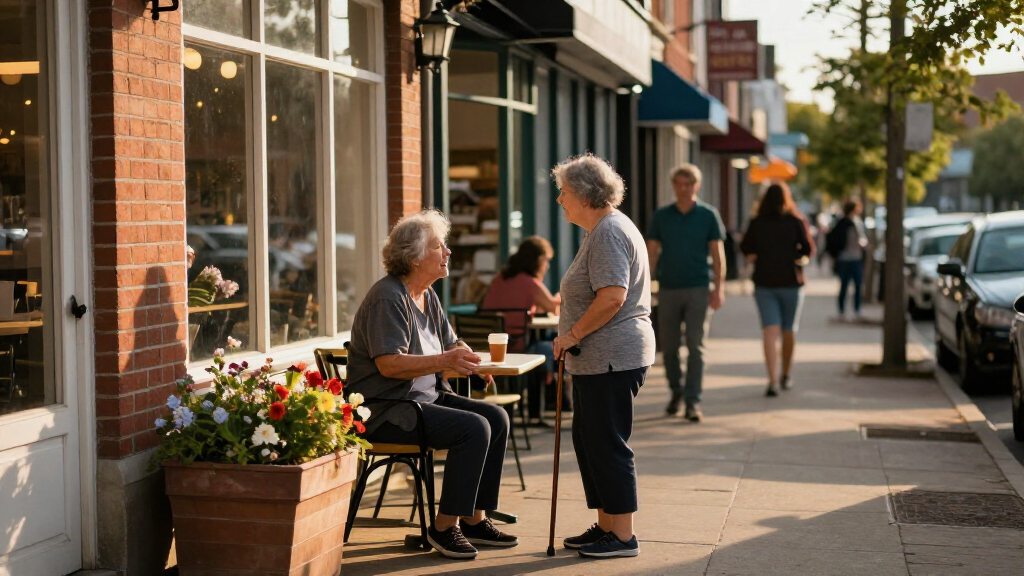
A friendly wave at the market can become the start of a good conversation, and a good conversation can become a standing Saturday coffee. In a country town, small, familiar moments often make social life feel easier than walking into a room full of strangers.
This guide offers practical ways to find those moments, from joining a garden group to asking a neighbor along for a short walk. You’ll see how to find local activities, make an invitation feel easy, and build connections at a pace that leaves room for comfort, privacy, and quiet days.
Choose one activity you already enjoy and attend it regularly so familiar faces have a chance to become acquaintances.
Visit a comfortable local gathering place at a steady time and use small questions to start conversations.
Make invitations specific and easy to accept, such as coffee after the market or a short walk on Thursday.
Ask about volunteer roles with clear time commitments, including one-off help for a festival or fundraiser.
Use online town groups to discover events, then follow up in person while keeping your privacy and pace in mind.
Simple Ways to Stay Social in a Country Town
Small, familiar moments can help turn a country town’s everyday routines into chances to connect. Start at your own pace, with places and activities you already enjoy.
Find a shared interest
Choose something you enjoy so conversation has a natural starting point.
Walk or garden
Try a walking group, community garden, or local cleanup.
Make or learn
Look for craft circles, library talks, classes, or local arts groups.
Join in locally
Explore music events, faith gatherings, sports, or volunteer teams.
Build a familiar routine
Regular visits can make a first hello feel easier over time.
Try a market, café, library, or community hall.
A recurring visit gives familiar faces a chance to recognize you.
Ask what is in season or how long someone has attended.
Make an easy invitation
A specific plan is simpler to answer than a vague promise to meet sometime.
- Suggest coffee after the market.
- Invite someone for a short walk on a set day.
- Offer a clear time and place.
- Make it easy to say yes or no.
- Keep the conversation brief if that feels comfortable.
- Let trust grow at a gradual pace.
Find ways to take part
Local noticeboards and online town groups can help you discover what is happening.
- Ask a librarian, shopkeeper, or community hall coordinator about regular activities.
- Check local online groups for events, recommendations, and volunteer opportunities.
- Ask about one-off help at a festival or fundraiser, or a role with a clear time commitment.
- In spread-out areas, consider coordinating a ride or meeting halfway.
Let a Familiar Activity Give You an Easy Way to Meet
To stay social in a country town, begin with an activity you already enjoy and attend it regularly. A shared interest gives you an easy opening line, and seeing the same people again gives a first hello room to grow into a real conversation.
Think about what you like doing when nobody is asking you to socialize: tending tomatoes, listening to local music, walking a quiet lane, sewing, or watching a game. Then look for a nearby club, class, team, or informal group. You don’t need a perfect match. A monthly craft morning or a short community garden shift can be enough to put you in the same room with people who share one part of your life.
For example, if you enjoy flowers, ask at the library or town hall whether a garden group meets. At the first visit, you might only learn who grows dahlias and when the next work morning falls. That is a perfectly good start. Regular participation works a little like watering a new seedling: one visit may not show much, but steady care helps it take root.
Look for options that suit your interests, mobility, and schedule:
- Outdoors: walking groups, gardening, birdwatching, or community cleanups.
- Indoors: craft circles, library talks, classes, or local arts groups.
- Community life: faith gatherings, volunteer teams, music events, or local sports.
Ask a local librarian, shopkeeper, or community hall coordinator what people do each week. Not every town has a group for every interest, and some meet only seasonally. Even so, starting with something you enjoy makes it easier to return—and that’s where familiar faces begin.
Products Worth Considering

14 Pcs Polycarbonate Greenhouse Panels, 6' x 2' x 0.24'' Twin-Wall Panels, Polycarbonate Sheet for All Weather Outdoor Garden and Greenhouse

Orbit B-hyve Smart Indoor/Outdoor 12-Zone Sprinkler Controller

Orbit B-hyve XD 4-Port Smart Hose Watering Timer with Wi-Fi Hub
As an affiliate, we earn on qualifying purchases.
Turn Local Gathering Places Into Friendly Routines
Local gathering places make it easier to stay social in a country town because they bring familiar people together around everyday errands and events. A regular visit to a market, café, library, community hall, or pub can create low-pressure chances to say hello.
Choose a place that feels comfortable, then try visiting at roughly the same time. You might stop at the Saturday market after picking up bread, or read the paper at the café on Wednesday morning. The first week, you may recognize a dog before its owner’s name. A few visits later, you can ask about the dog, the weather, or a stall you both like. Recurring interactions matter because people get to know one another in small steps.
A routine needn’t mean spending hours away from home. If you prefer quieter settings, a library book group or a daytime community hall event may suit you better than a crowded evening gathering. If you don’t drink, you can still meet people at cafés, music nights, markets, faith gatherings, or sports events. Choose the setting, not someone else’s idea of what socializing should look like.
You can make the visit easier by picking one small goal: greet the stallholder, ask what’s in season, or sit near the same table. Say, “Those apples look lovely—are they good for baking?” That question gives the other person a natural way to answer, and you don’t have to invent a grand conversation. In a country town, friendships often grow through seeing the same people at everyday places. After a while, a familiar nod can feel like a thread tying your week together.
Use This Simple Three-Step Plan to Make the First Move
You can make the first social move easier by choosing a specific activity, asking one person, and keeping the invitation light. A clear plan such as “Would you like coffee after the market on Saturday?” is easier to answer than “We should get together sometime.”
- Choose something you already plan to do. A short walk, a market visit, a local concert, or a cup of tea keeps the invitation grounded in real life.
- Ask one person with a clear time and place. Try, “I’m going to the library talk Thursday at two. Would you like to join me?”
- Leave room for an easy yes or no. Add, “No worries if that doesn’t suit,” and suggest another day only if they seem interested.
For instance, after two friendly chats with someone from a garden group, you could ask if they’d like to stop at the bakery after the next meeting. The invitation is connected to a shared routine, so neither of you has to plan a whole afternoon. A low-pressure invitation is like opening the gate to the garden; the other person can step in when it suits them.
If the person can’t come, that doesn’t tell you everything about how they feel. They may have family plans, a long drive, or simply a busy week. Keep being pleasant when you meet again, and let future invitations emerge naturally. If you are shy, prepare a question beforehand—“How long have you been coming to this group?”—and give yourself permission to have a short conversation. A good first step can be brief. You don’t have to turn every hello into a new friendship in one afternoon.
Volunteer in Ways That Fit Your Time and Energy
Volunteering can help you meet people while contributing to a place you care about, and it can be as small as an hour at a fundraiser. A manageable commitment lets you take part without making your week feel overfull.
Country towns often rely on people who pitch in for a festival, community garden, library sale, local club, or food drive. Ask what jobs are available and how often volunteers are needed before agreeing. You might help fold programs for the annual fair, water seedlings twice a month, or greet visitors at a music event. Each task creates a reason to talk: “Where should these chairs go?” can lead to learning who organizes the next gathering.
Choose a role that matches your comfort and capacity. If you enjoy talking, you might welcome people at a door. If you prefer working quietly alongside others, sorting donated books or preparing garden beds may feel more natural. A clear, limited commitment also makes it easier to say yes with confidence: “I can help on the first Saturday each month,” gives everyone a useful plan.
Imagine helping set up tables for a harvest supper. You may chat with a retired teacher at one end and a young parent at the other while arranging jars of pickles and fresh bread. The shared task gives people of different ages an easy subject, without requiring anyone to carry the conversation alone. You can ask the organizer whether the group needs regular help or just a hand for one event. If the role stops feeling enjoyable, you can adjust it. Community life is strongest when helping remains generous and sustainable.
Use Online Town Groups to Find Your Next In-Person Activity
Local online groups and community noticeboards can help you discover nearby events, ask practical questions, and find a first point of contact. They work best as a bridge to in-person conversation, since a shared cup of tea or garden task often builds more familiarity than a string of posts.
Check the town website, library noticeboard, community social media pages, or local newsletter for events and group details. You might find a quilting morning, a walking route, a volunteer call, or a concert at the hall. Availability differs from town to town, so don’t assume every event will be listed online. A quick question at the library or post office may uncover a group that has never needed a website.
If you post, keep the message simple and specific: “I’m new to town and interested in a gentle walking group. Does anyone know of one that meets on weekday mornings?” That gives people a useful way to reply. You can also ask whether an event welcomes newcomers or whether there is a contact person who can help you find the room. Online discovery can make the first visit less uncertain, especially if you know where to park and what time to arrive.
Be thoughtful about privacy. Share only what you’re comfortable making public, and let trust develop gradually when you meet people face to face. For example, if someone from a noticeboard invites you to a group walk, choose a public meeting place and follow your usual good sense about new acquaintances. You don’t have to join every group or respond to every message. Treat online information as a handy community notice pinned beside the post office door: useful for finding what’s on, while the real connection grows in person.
Plan Around Distance, Rides, and Your Need for Quiet
Social plans are easier to keep when they account for the distance between homes, transport options, and the amount of company you enjoy. In a spread-out country town, meeting halfway or pairing an outing with market day can save time and make the trip feel worthwhile.
If you live far from town or no longer drive, ask whether a club has a carpool, check for community transport, or arrange a lift with someone you already know. You could suggest meeting at the library before a talk instead of traveling to two separate homes. If rides are hard to coordinate, look for an activity nearer your home, invite a neighbor for tea, or attend the event that takes place when you already need to be in town. Practical planning keeps distance from deciding your whole social life.
There’s also no single right amount of company. You might enjoy a busy market morning and then want a quiet afternoon with a book and the kettle humming. A comfortable social rhythm leaves space for both. If you work from home or have limited free time, a short recurring commitment—a monthly class or a weekly coffee stop—may be more realistic than several events each week.
Suppose the nearest town gathering is a twenty-minute drive and you prefer not to travel twice in one day. On market Saturday, you might combine errands with a short café visit and the garden club’s morning session. That one planned trip gives you several chances to greet familiar faces without filling every day with outings. You can also tell a new acquaintance, “I’m glad to see everyone, though I usually head home by noon.” Friendly boundaries help people understand the rhythm that suits you, and they leave room for the next visit to feel welcome.
Frequently Asked Questions
How do I meet people when I’m new to a small town?
Start with a regular activity or public place that suits you, such as a library event, market, walking group, or garden club. A simple question about the activity can begin a conversation, and attending again gives people a chance to recognize you.
What if everyone already seems to know each other?
Established groups can feel close-knit at first, but you don’t have to win over a whole room in one visit. Arrive a little early, ask the organizer where you can help, or speak with one person about the shared activity. Give it several visits before deciding whether the group feels welcoming.
How can I make friends if I don’t drink or play sports?
Look for places built around other interests: a craft circle, community garden, library talk, local concert, faith gathering, or volunteer project. You can also meet people at a café or market. A shared interest gives you a natural subject to talk about.
Ask local groups about carpooling or community transport, and see whether you can meet someone halfway. Combining an outing with errands or market day can reduce extra trips. If getting into town is difficult, try a neighbor visit or an activity closer to home.
Are local online groups a good way to meet people?
They can help you find events, ask about clubs, and learn who to contact. Use them to arrange a comfortable in-person first meeting, then let familiarity grow through shared activities. Share personal details only at a pace that feels right to you.
Conclusion
Pick one place or activity you genuinely enjoy, and give it a regular spot in your week. A market morning, a library group, or an hour helping in the community garden can put familiar faces in your path without asking you to change who you are.
Say hello, return when you can, and invite someone along when it feels right. Friendship in a country town may grow quietly, like green shoots along a garden fence—one small, welcome meeting at a time.