
TL;DR

Turn quiet afternoons into listening time
- Thousands of audiobooks, podcasts and originals
- Listen on your phone, tablet or Echo — also offline
- Cancel anytime
To organize medications simply and safely, keep one current list of prescriptions, over-the-counter products, vitamins, and supplements, then choose reminders or a sorting method that fits your routine. Check storage, pill organizer, missed-dose, and disposal questions with a pharmacist because instructions vary by medicine. A small daily habit, such as checking your list at breakfast, can make the whole system easier to maintain.
A medicine routine can feel as ordinary as setting the kettle on the stove—until a new prescription, a changed dose, or a busy morning makes you stop and wonder what you took. A clear system gives you a reliable place to check, without asking you to keep every detail in your head.
This guide shows you how to make one accurate medication list, choose reminders that suit your day, store medicines according to their labels, and plan for missed doses, refills, and travel. You’ll also learn when to ask a pharmacist before using a pill organizer or changing how you take a medicine. The aim is a calm, practical routine that supports your independence.
Keep one current list with prescription and nonprescription medicines, vitamins, supplements, doses, schedules, and reasons for use.
Ask a pharmacist to check which medicines can go in a pill organizer before transferring them from labeled packaging.
Use a reminder that fits your day, and mark doses after taking them so you don’t have to rely on memory.
Follow each medicine’s storage and missed-dose instructions; ask before changing a dose, splitting, or crushing a tablet.
Check refill supplies ahead of time and use local pharmacy or health authority guidance for disposal.
A practical guide · medication routine
How to Organize Medications Simply and Safely
Build a calm routine around one accurate list, reminders that fit your day, and medicine specific guidance. Keep the details somewhere reliable so you do not have to carry them all in your head.
A pill organizer can help, but first check whether each medicine can leave its labeled packaging.
Storage, handling, and missed dose instructions vary. Your pharmacist can review them medicine by medicine.01 / Start with the facts
Keep one list you can trust
A dependable list makes appointments, urgent care visits, and medication reviews easier to navigate.
Include the whole picture
- Prescription medicines
- Over-the-counter products
- Vitamins and supplements
- Name and strength
- Dose and schedule
- Reason for use
- Prescriber or pharmacy
- Allergies or past reactions
“Medicine A, 10 mg, one tablet each evening, for blood pressure.”
Use clear wording. Keep the list with important household papers or in a health app you already use. Update it whenever a medicine starts, stops, or changes.
02 / Make it fit real life
Choose a reminder for your day
The best prompt is one you notice and can use comfortably, while following the prescribed timing.
Link it to a regular activity
Try breakfast or locking the door at bedtime, when the medicine’s instructions allow.
Choose one simple cue
Use a written checklist, calendar alert, phone reminder, or pharmacist approved organizer.
Mark the dose after taking it
A tick or quick tap can help answer, “Did I already take this?” without relying on memory.
03 / Sort with care
Ask before using a pill organizer
A tidy weekly box can be useful for some schedules. A pharmacist’s guidance decides what belongs inside.
Packaging can protect medicine
Some products need protection from moisture or light, accurate package labeling, or special handling. Certain liquids and formulations may not suit an organizer.
Review each medicine
Bring your full list and containers to a pharmacist. Ask what can be sorted, what should stay labeled, and how to manage any schedule changes.
04 / Protect the medicine
Follow the label for storage
There is no single storage spot that suits every product. Follow the package and pharmacist instructions.
Use the directions for that product.
Many medicines belong in a cool, dry place away from sunlight. Some need refrigeration or other specific conditions.
05 / Keep the system current
Plan ahead for changes
Small check ins help your routine stay useful through refills, travel, and medication reviews.
Check supplies early
Set a reminder before medicines run low. Pharmacy refill alerts or synchronization may be available.
Keep labels with you
Carry medicines in labeled containers and follow product guidance for temperature sensitive items.
Use local advice
Ask about pharmacy or community take back programs. Follow local health authority guidance; do not flush unless official instructions say to.
Start With One Medication List You Can Trust
To organize medications simply and safely, keep one current list that records what you take, how much, when, and why. Include prescriptions, over-the-counter medicines, vitamins, and supplements, along with the prescriber or pharmacy when you know it. One dependable list is easier to update than several scraps tucked into a kitchen drawer.
Write down each medicine’s name and strength, your dose and schedule, and the reason you take it. Add allergies or past reactions, and note who prescribed it. For example, “Medicine A, 10 mg, one tablet each evening, for blood pressure” gives a pharmacist more useful detail than a bottle name alone. Use your own clear wording, and ask the pharmacy to explain anything that remains confusing.
Keep the list somewhere you can find quickly, such as with your important household papers or in a health app you already use. Bring it to appointments and urgent-care visits, and update it whenever a clinician changes a medicine or you start or stop an over-the-counter product. A printed copy in your purse can help if your phone battery runs flat while you’re away from home.
A list also makes a medication review more practical. You can bring the list—and, if helpful, the containers themselves—to a pharmacist or clinician. Ask them to check for overlapping ingredients, confusing schedules, interactions, and medicines that may no longer be needed. Don’t stop, split, crush, or change a dose on your own; get instructions from a qualified professional first.
Products Worth Considering

VEVOR Walk-In Tunnel Greenhouse with Watering System, 15 x 7 x 7 ft

EGO POWER+ Cordless Electric Leaf Blower 530 CFM with Battery (LB5302)

Greenworks 40V 12-Inch Cordless Chainsaw with 2.0Ah Battery and Charger
As an affiliate, we earn on qualifying purchases.
Choose a Reminder System That Fits Your Day
- Pick an everyday anchor. Link a dose to a regular part of your day, such as breakfast or locking the back door at bedtime, when the medicine’s instructions allow.
- Choose one reminder. Try a written checklist, a calendar alert, a phone reminder, or a pill organizer if your pharmacist says it suits your medicines.
- Mark each dose after you take it. A tick on paper or a quick tap on your phone can help prevent wondering later whether you already took it.
- Review the setup when anything changes. Update the list and reminder after a new prescription, new dose, or schedule change.
A reminder system works best when it fits the rhythm of your home. If you enjoy coffee at the kitchen table each morning, a written checklist nearby may feel more natural than a phone alert that gets lost among messages. Someone who spends mornings in the garden might prefer a calendar notification that sounds before heading out.
Some people take medicines at several times each day, so the routine may need more than one cue. Try pairing each reminder with a stable activity, then keep a simple record that shows the dose has been taken. This “before and after” change—from trying to remember every dose to checking a small, familiar prompt—can make a complicated day feel more orderly.
Phone apps and pharmacy refill alerts can help, but they don’t confirm that the medicine, dose, or timing is correct. App features vary, and health details stored on a phone raise privacy questions. Choose a tool you can use comfortably, check its settings, and keep a paper backup if that suits you. If reminders conflict with the label or your clinician’s directions, ask the dispensing pharmacist to clarify the schedule.
Ask Before Putting Medicines in a Pill Organizer
A pill organizer can help you sort regular doses by day or time, but it is suitable only for medicines that your pharmacist confirms can leave their original packaging. Some medicines need protection from light or moisture, accurate package labeling, or special handling. Certain liquids and formulations also may not belong in an organizer. Check medicine by medicine before you transfer anything.
That check matters even when a tablet looks like the others. A pharmacist can review your full list and tell you which medicines may be sorted, which should stay in their labeled containers, and how to follow any special handling instructions. If you take a medicine with a complicated schedule, bring its container and ask the pharmacist to walk through the directions with you.
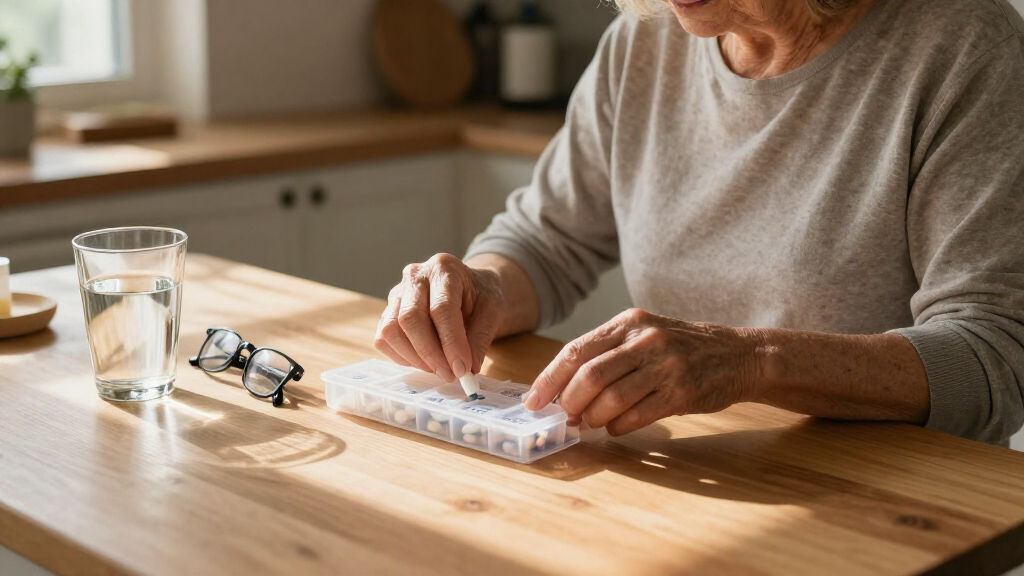
If an organizer is suitable, set it up in a well-lit spot where you can read the labels and work without rushing. Follow the organizer’s instructions, keep its compartments labeled, and make filling day a regular appointment with yourself. For instance, you might sit at the dining table each Sunday afternoon with your medication list and containers, then check each compartment against the schedule before putting everything away.
After a prescription or dose changes, review the organizer before the next dose. If the instructions are unclear, keep the medicine in its labeled container while you contact the pharmacist. A tidy weekly box can be useful, like a row of seed packets ready for spring planting, but the pharmacist’s directions decide what belongs inside.
Store Medicines Where Their Labels Say
Store each medicine according to its package label and pharmacist’s instructions; there is no single storage spot that suits every product. Many medicines belong in a cool, dry place away from sunlight, while some need refrigeration or other specific conditions. Follow the individual directions rather than relying on habit.
The bathroom cabinet may seem convenient, but steamy showers can bring moisture and warmth into the room. A sunny windowsill or a glove compartment can also expose medicines to heat or light. If the label calls for ordinary room storage, a secure shelf in a dry bedroom or pantry may be more suitable, provided it stays away from children and pets.
Keep medicines in child-resistant packaging and out of sight and reach of children and animals. Put a container away as soon as you finish using it, even if you expect to take another dose later. Don’t call medicine candy; use its proper name and explain that it is only for the person it was prescribed or purchased for.
Imagine taking an evening tablet while the kettle cools and the dog waits by the door. A quick routine—close the container, return it to its secure spot, and check that no loose tablet remains on the counter—can help make the kitchen safer. If you’re unsure whether a medicine needs refrigeration or special protection, ask a pharmacist instead of guessing.
Handle a Missed Dose Without Guessing
If you miss a dose, check that medicine’s own instructions or ask a pharmacist what to do; the right response depends on the medicine and how late the dose is. Don’t double a dose to make up for one unless the instructions specifically tell you to. A general rule can’t safely replace product-specific directions.
Keep the patient information that came with the medicine, or ask the pharmacy how to find it again. If you notice a missed dose while preparing dinner, for example, don’t automatically take it with the next evening dose. Check the instructions first, and call the dispensing pharmacy if the answer is unclear. Have the container and your medication list nearby so you can read the exact name and strength.
Ask your pharmacist about missed doses when you first start a medicine, not only after a mix-up. You can write the answer beside the medicine on your list if the pharmacist recommends that approach. If two labels appear to give conflicting directions, pause before changing your routine and contact the pharmacist or prescriber for clarification.
The same care applies to tablets you find difficult to swallow. Some tablets need to remain intact, and capsules may have special directions. Before splitting, crushing, or opening any medicine, check with a pharmacist. A small question at the counter is a better way to protect your routine than relying on how a tablet looks.
Plan Refills and Travel Before You Run Low
Check your supply before it runs low, set a refill reminder, and ask the pharmacy whether it offers refill alerts or synchronized refill dates. Those simple steps can give you time to sort out a delayed prescription, a holiday schedule, or a trip away from home. Availability and local prescription rules vary, so ask your pharmacy what applies to you.
You might check your remaining supply on the first day of each month, then note when to request the next refill. If several medicines run out at different times, ask the pharmacist whether their refill dates can be coordinated. A calendar reminder can be especially handy before a long weekend, when pharmacy opening hours may differ from your usual routine.
For travel, keep medicines in their labeled containers and follow their storage instructions. Check ahead if a medicine needs temperature control or special handling, and plan for your journey accordingly. For example, a road trip in warm weather calls for a look at the product’s storage guidance before you leave; a hot car may not be a suitable place to leave medicine.
Take your current medication list with you as well. That gives you a clear record if you need to contact a pharmacy while away, and it can help you explain your routine during a visit. A little planning before packing makes room for the good parts of a trip: a quiet porch, a country lane, and time to enjoy both without scrambling for a refill.
Dispose of Old Medicines Through Local Guidance
For expired or unwanted medicines, ask a pharmacy or local health authority about take-back programs and product-specific disposal instructions. Safe disposal rules differ by place and by medicine. Don’t flush a medicine unless its label or official local guidance says to do so.
Start by separating medicines you no longer use from the ones in your current routine, but don’t discard a prescription simply because it looks old or unfamiliar. First ask your pharmacist whether it remains part of your treatment. This is especially helpful after a hospital visit or a change in prescriber, when an older container may still be sitting beside a newer one.
A pharmacy take-back option, where available, can give you a clear next step. Call ahead to ask what it accepts and how to prepare the medicines. If no take-back program is available nearby, ask the pharmacist or local health authority for the disposal directions that apply to your area and product. Local guidance is more reliable than a one-size-fits-all tip.
Keep unwanted medicines secured until you can dispose of them, especially if children or pets visit your home. For example, put them in a closed, out-of-reach place rather than leaving them in an open bag by the back door. Clearing out an old medicine shelf feels a little like tidying the potting shed: first check what you have, then put each thing where it belongs.
Frequently Asked Questions
What should I include on a medication list?
Record each medicine’s name, strength, dose, timing, and reason for use, along with the prescriber or pharmacy if known. Include over-the-counter medicines, vitamins, supplements, allergies, and relevant reactions. Update the list whenever your routine changes.
Should I use a pill organizer?
A pill organizer may help with a regular schedule, but ask a pharmacist whether each medicine can be removed from its original packaging first. Some products need special protection, labeling, or handling. Follow the organizer’s directions and keep compartments clearly labeled.
Where should I store medicines?
Follow the package label and pharmacist’s instructions, since some medicines need special conditions. Many belong in a cool, dry place away from sunlight, children, and pets. Don’t assume a bathroom cabinet or car is suitable.
What should I do if I miss a dose?
Check the instructions for that medicine or ask a pharmacist, because the right response depends on the product and timing. Don’t take an extra dose unless the medicine’s instructions specifically say to. Keep the container handy when you call for advice.
Can I split or crush a tablet?
Not always. Some tablets need to stay intact, and capsules can have special instructions. Ask a pharmacist before splitting, crushing, or opening any medicine.
How can I avoid running out of medicine?
Check your supply regularly, set a refill reminder, and ask your pharmacy about refill alerts or coordinating refill dates. Plan ahead for travel and holidays, since pharmacy hours and prescription rules can vary by location.
How should I dispose of expired or unwanted medicines?
Ask a pharmacy or local health authority about take-back programs and product-specific disposal directions. Rules vary by location, so don’t flush medicines unless the label or official local guidance says to.
Conclusion
Start with one current medication list, then build a reminder and storage routine around the directions for each medicine. Ask your pharmacist to review the full list and confirm whether an organizer is suitable, especially when instructions change or seem unclear.
A few steady habits can keep the day feeling yours: breakfast in the warm kitchen, a checked list close at hand, and medicines put safely away before you step out into the garden.