
TL;DR

Turn quiet afternoons into listening time
- Thousands of audiobooks, podcasts and originals
- Listen on your phone, tablet or Echo — also offline
- Cancel anytime
Button hooks guide buttons through buttonholes, while zipper pulls give you a larger grip on a zipper slider. To choose a useful aid, try it with the clothes you wear most, paying attention to handle comfort, tool length, and fastener size. A little practice with a familiar garment can help you find a comfortable technique.
A tiny shirt button can turn getting dressed into a morning chore when your fingers would rather hold a warm mug than pinch a fastener. Button hooks and zipper pulls offer a simple way to manage those small parts of a garment with a larger grip or guiding loop.
This guide explains how each tool works, what to check before choosing one, and how to practice without turning your bedroom into a workshop. You’ll also find ideas for clothing changes and other dressing aids, because the most comfortable solution depends on your usual clothes and what feels natural in your hands.
These tools can make particular fasteners easier to handle, though they do not suit everyone or guarantee independent dressing. Think of them as practical helpers, like a well-shaped garden trowel: the right size and grip can make a familiar task feel more manageable.
A button hook guides a button through its buttonhole; a zipper pull gives you a larger grip on the slider.
Test a tool with the clothes and fasteners you use most, since fabric, button size, and zipper placement affect comfort.
Check handle thickness, shape, tool length, and wire feel before choosing an aid.
Practice with a loose, familiar garment while seated comfortably and able to see the fastener.
Consider easier closures or ask an occupational therapist for suggestions if the tool remains difficult to use.
A practical dressing guide
Simple Tools for Buttoning and Zipping with Ease
Button hooks guide buttons through buttonholes. Zipper pulls give you a larger grip on a slider. Try each aid with the clothes you wear most, and notice how the handle, length, and fastener feel in your hand.
01 / How they work
Two small tools, two different jobs
Each aid makes a particular fastener easier to manage by changing how you guide or grip it. Some dressing aids combine both features on one handle.
Guide the button
Button hook
A thin wire loop passes through the buttonhole, catches the button, then draws it back through while you steady the fabric.
Enlarge the grip
Zipper pull
A loop, tab, or extension attaches to the slider, giving you more room to hold and pull. It does not repair a stuck or broken zipper.
Extend your reach
Other dressing aids
A combination tool may offer both features. Dressing sticks and reachers serve a broader purpose when clothing or fasteners are harder to reach.
02 / Find a good fit
Choose for your hand and wardrobe
The right fit depends on your grip, reach, preferred technique, and usual fasteners. Test the aid on the garment you want to use it with.
| Tool | What it does | Good first trial | Possible snag |
|---|---|---|---|
| Button hook | Guides a button through its hole with a wire loop | A loose cardigan or roomy shirt | Small buttons or snug holes may take patience |
| Zipper pull | Adds a larger loop or tab to the slider | A coat or bag with a working zipper | It cannot fix a jammed or broken zipper |
| Combination aid | Offers a button hook and zipper pull on one handle | A wardrobe with both fasteners | One end may feel easier than the other |
03 / Practice gently
Build a comfortable routine
Start with a loose, familiar garment and a fastener you can see and reach. A few slow attempts can help you notice what needs adjusting.
Settle in
Position the garment so you can see the fastener without rushing.
Try one fastener
Guide the button with the loop, or attach the zipper extension as directed.
Notice the fit
Check whether the handle, angle, wire, or fabric feels awkward.
Adjust and repeat
Try another familiar garment. Keep practice brief and comfortable.
04 / If you need another option
Small changes can help
If a tool remains difficult, there are other ways to make clothing easier to manage. What feels useful varies from person to person.
Change the closure
Adaptive clothing
Explore garments with larger fasteners, magnetic closures, or easier-to-grip zipper tabs.
Get practical guidance
Ask an occupational therapist
A clinician can demonstrate techniques and suggest options based on your hand function and clothing.
Find the cause
Talk with a health professional
Sudden, worsening, painful, or daily-life-limiting dressing problems are a reason to seek professional advice.
See how a button hook and zipper pull handle small fasteners
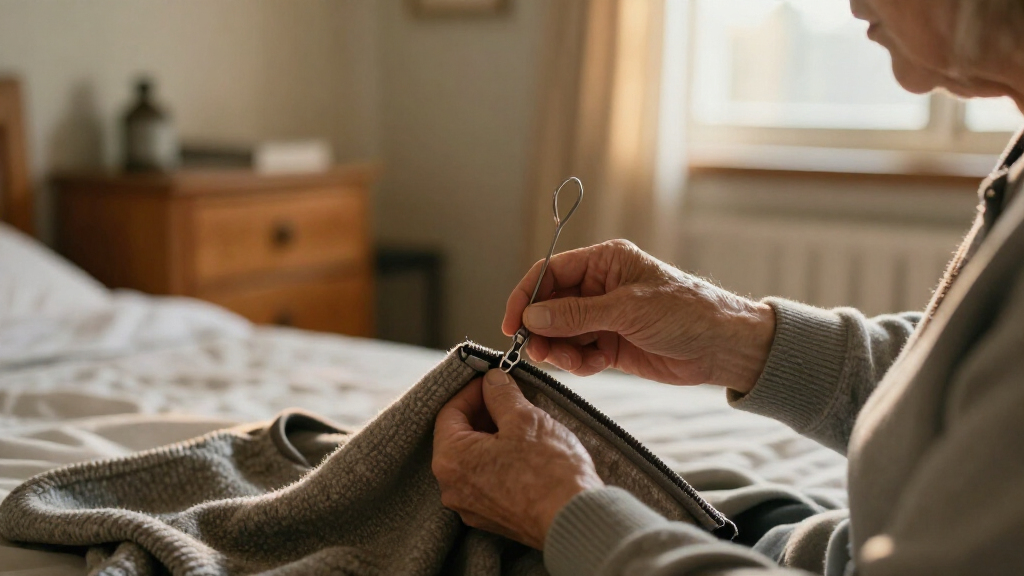
Buttoning and zipping tools make fasteners easier to manage by giving you a loop to guide a button or a larger grip to pull a zipper. A button hook has a handle and a thin wire loop; a zipper pull attaches to the slider and extends its gripping area. Each tool tackles a different little task.
To use a button hook, pass its wire loop through the buttonhole, catch the button, and draw it back through while holding the fabric steady. Imagine fastening the cuff on a favorite flannel shirt: the hook guides the button instead of asking you to pinch its edges between your fingertips. It may take practice, especially with tight buttonholes or small buttons.
A zipper pull gives you a larger loop, tab, or extension to hold. If the original slider is a small metal tab, the added loop can give your fingers more room to grasp. That can be handy on a winter coat when you want to pull the zipper upward with one smooth movement. The tool does not fix a stuck or damaged zipper, however, and the fabric may still need to be held in place.
Some small assistive devices combine both features, with a button hook at one end and a zipper pull at the other. A combination tool can be convenient to keep in a bedside drawer, while separate tools may feel simpler if you use one feature much more often. The best arrangement depends on the garments you wear and the way you like to hold a tool.
Products Worth Considering

Greenworks 80V Cordless Electric Leaf Blower with 2.5Ah Battery and Charger

VEVOR 14-Pack Polycarbonate Greenhouse Panels, 2 × 4 ft

Husqvarna 525P4S Gas-Powered Pole Saw with 12-Inch Bar
As an affiliate, we earn on qualifying purchases.
Choose a handle and length that feel right with your clothes
The right dressing aid fits your hand, reach, and usual fasteners. A comfortable handle can make a tool easier to guide, while a longer tool may help when a zipper or button sits somewhere awkward to reach. The fit matters as much as the tool’s basic design.
Check the handle’s thickness and shape. A narrow, straight grip may suit someone who prefers a light tool, while a thicker or cushioned handle may feel steadier in the palm. For example, try holding the tool as you would while fastening a shirt cuff. If your hand feels strained before the button reaches the hole, consider a different shape or a simpler technique.
Pay attention to the button hook’s wire, too. It needs enough strength to guide a button through, yet a wire that feels bulky may not work well with a snug buttonhole. A loose coat button and a small shirt button can call for different levels of finesse. Try the aid with the actual garment rather than judging it by appearance alone.
Length is another tradeoff. A longer handle may help you reach a back zipper, but it can feel less nimble when fastening a close-fitting shirt. If you usually wear pullovers and a zip-front jacket, a short, easy-to-hold tool may be the more useful choice. Comfort is personal; a tool that works for your neighbor may not suit your hand or wardrobe.
Follow these simple steps to practice with a familiar garment
Practice with an easy garment first, using a button or zipper you can see and reach without rushing. Starting with a loose cardigan or roomy shirt gives you more space to steady the fabric than a fitted cuff or the back of a dress. A quiet practice round can help you learn how the tool moves.
- Settle into a comfortable position. Sit where you can see the fastener clearly, with the garment supported in your lap or on a table.
- Try one fastener at a time. For a button hook, pass the loop through the hole, catch the button, and guide it back. For a zipper pull, attach the extension as directed and hold the fabric steady as you pull.
- Notice what feels awkward. Is the handle too thin, too long, or hard to angle? Does the buttonhole feel too tight? Those details tell you what to adjust.
- Repeat on another familiar garment. A tool that works on a loose cardigan may feel different on a crisp shirt, so try the clothes you actually wear.
For instance, you might practice on the large buttons of a housecoat before attempting a smaller shirt cuff. Move slowly enough to watch the fabric and fastener. If the button slips off the hook, pause and try again with the cloth held more firmly; there is no prize for racing the clock.
Keep practice brief and comfortable. A few tries at a time may suit you better than working through an entire row of buttons. If the task remains difficult, an occupational therapist can demonstrate techniques or suggest a tool based on your hand function and clothing.
Match the tool to the fastener you use most
A button hook and a zipper pull solve different problems, so start with the fastener that causes you the most trouble. A hook guides a button through its hole; a pull makes a zipper slider easier to grip. A combination tool can cover both needs, but it still has to work with your clothes.
| Tool | What it does | Good first trial | Possible snag |
|---|---|---|---|
| Button hook | Uses a wire loop to catch and guide a button through its hole | A loose cardigan or roomy shirt with visible buttons | A small button or snug buttonhole may take patience |
| Zipper pull | Adds a larger loop or tab to the zipper slider | A coat or bag with a working zipper | It will not repair a jammed or broken zipper |
| Combination aid | Offers a button hook and zipper pull on one handle | A wardrobe with both buttons and zippers | One end may suit your hand better than the other |
Consider a morning when you reach for a cardigan and coat. If the cardigan’s small buttons are the hardest part, a button hook may be the useful first choice; if the coat’s metal tab is difficult to grasp, try a zipper extension. A combination aid can reduce the number of items you keep nearby, though a single-purpose tool may feel less fiddly.
Let your clothing guide the choice. Test a tool on a favorite garment and then on another type of fastener before relying on it for everything. Fabric thickness, button size, and zipper placement all change how the tool feels in use.
Make dressing easier with small changes to clothing and setup
Small changes around the fastener can make dressing aids easier to use. Good light, a stable seat, and clothing placed within easy reach give you room to work without fumbling. These details can matter as much as the button hook itself.
Try laying out a shirt on the bed the evening before, with the front facing up and the first button easy to reach. A bright bedside lamp can make a dark buttonhole easier to see, especially on a navy cardigan. If you dress in a chair, choose one that lets you sit comfortably and keep the garment supported rather than balancing it on your knees.
Some garments are simply easier to fasten than others. Larger buttons, magnetic closures, or easier-to-grip zipper tabs may be worth exploring when ordinary fasteners remain awkward. Adaptive clothing has become more visible, but styles and features vary; check that a garment feels comfortable and suits the way you like to dress.
Other simple tools for daily living, such as dressing sticks or reachers, may help with clothes or fasteners that are hard to reach. They serve a broader purpose than a button hook or zipper pull. For example, a dressing stick may help position a sleeve, while a button hook handles the button itself. Choose each aid for the job it actually makes easier.
If you are unsure what may fit your needs, an occupational therapist can suggest options and show techniques. Sudden, worsening, painful, or daily-life-limiting difficulty with dressing is also a good reason to speak with a qualified health professional. These tools support a task; they do not identify or treat the cause of a new problem.
Keep expectations practical and give yourself room to adjust
A dressing aid can help with a particular fastener, but no single tool suits every person, garment, or morning. Hand strength, coordination, reach, clothing fit, and personal preference all affect whether a button hook or zipper pull feels useful. Trying a tool is part of finding out.
You may find that a hook works beautifully on the larger buttons of a coat but feels awkward on a fitted blouse. That does not mean you have failed to learn it; the small buttonhole and fabric may call for a different method or garment. Likewise, a zipper pull can give you more to grasp but cannot make a damaged slider glide smoothly.
Recent consumer designs include different handle shapes, lighter materials, combination aids, and zipper extensions. These are broad design trends, not a promise that a particular model will work for you. Read current descriptions carefully and check the tool’s shape, length, and materials against your own needs before choosing.
Give yourself permission to adapt. You might keep a button hook beside the clothes you wear often, choose a cardigan with larger buttons for everyday use, and save a tricky cuff for a time when you have more patience. Independence can include choosing a simpler garment or asking a professional to demonstrate a technique. The goal is a comfortable routine that respects your preferences.
Frequently Asked Questions
What is a button hook?
A button hook is a dressing aid with a handle and a thin wire loop. You pass the loop through a buttonhole, catch the button, and draw it back through while holding the fabric steady.
How do you use a button hook?
Pass its loop through the buttonhole, guide the loop around the button, and draw the button back through. Try the technique on a loose, familiar garment first, since snug holes and small buttons may take more practice.
What does a zipper pull do?
A zipper pull attaches to the zipper slider and adds a larger loop or tab to grip. It may help when the original slider is small, but it will not repair a zipper that is stuck or damaged.
Can one tool help with both buttons and zippers?
Yes. Some combination aids have a button hook at one end and a zipper pull at the other. Test both ends with your usual clothes, because one feature may feel more comfortable or useful than the other.
Who might find dressing aids useful?
People who find small fasteners difficult to grip, pinch, coordinate, or reach may find these aids helpful. Individual needs vary, so trying a tool with familiar clothing can show whether it suits your routine.
What if the tool is still hard to use?
Try a different handle shape or length, practice with a roomier garment, or consider clothing with larger or alternative closures. An occupational therapist can suggest adaptations and demonstrate techniques suited to your needs.
Conclusion
Start with the fastener that slows you down most, then try a button hook or zipper pull with a familiar garment and a comfortable grip. Give yourself time to see whether the tool suits your clothes and your way of moving.
A well-chosen little aid can make a shirt cuff or coat zipper feel less like a puzzle and more like part of an easy morning. Let comfort, not speed, be the measure.