TL;DR

Turn quiet afternoons into listening time
- Thousands of audiobooks, podcasts and originals
- Listen on your phone, tablet or Echo — also offline
- Cancel anytime
Efficient watering of raised beds involves deep, infrequent watering, mulch, and automation tools like drip irrigation and timers. These methods save water, reduce effort, and promote healthy plants.
Watering your raised bed shouldn’t feel like a chore. Imagine walking out to your garden and knowing your plants are getting exactly what they need — no overspray, no wasted water, no fuss. It’s all about working smarter, not harder, especially when your days are busy or you want to conserve resources.
In this guide, you’ll learn how to turn a simple watering routine into an efficient system that keeps your garden lush with less effort. From smart tools to easy techniques, you’ll discover ways to save time, water, and energy — all while growing healthy, happy plants in your favorite raised beds.
Deep, infrequent watering encourages stronger roots and healthier plants.
Mulching can cut your watering needs by up to 50%, saving water and effort.
Automated systems like drip irrigation with timers make watering effortless and consistent.
Regularly check soil moisture to avoid over- or under-watering and keep plants happy.
Seasonal adjustments and early morning watering maximize efficiency and plant health.
How to Water a Raised Bed Efficiently with Less Effort
TL;DR: Deep, infrequent watering, mulch, drip irrigation, timers, and soil moisture checks turn watering from a daily chore into a calm, precise routine that saves water and grows stronger plants.
Drip irrigation plus soil moisture sensors can cut water use by up to 70%.
Water deeper, not constantly.
Raised beds drain faster than in-ground beds, but daily surface sprays train roots to stay shallow. Slow, thorough watering encourages roots to grow down into cooler, more stable soil where moisture lasts longer.
Deep Watering
Water long enough for moisture to reach the lower root zone. Plants become sturdier, more drought tolerant, and less dependent on constant attention.
Mulch Cover
A 2–3 inch layer of straw, wood chips, or composted bark slows evaporation, moderates soil temperature, and improves soil health over time.
Moisture First
Use your finger or a meter before watering. If soil feels dry one inch below the surface, water deeply; if it feels damp, wait.
Check Soil
Test moisture one inch below the surface before turning on water.
Water Slowly
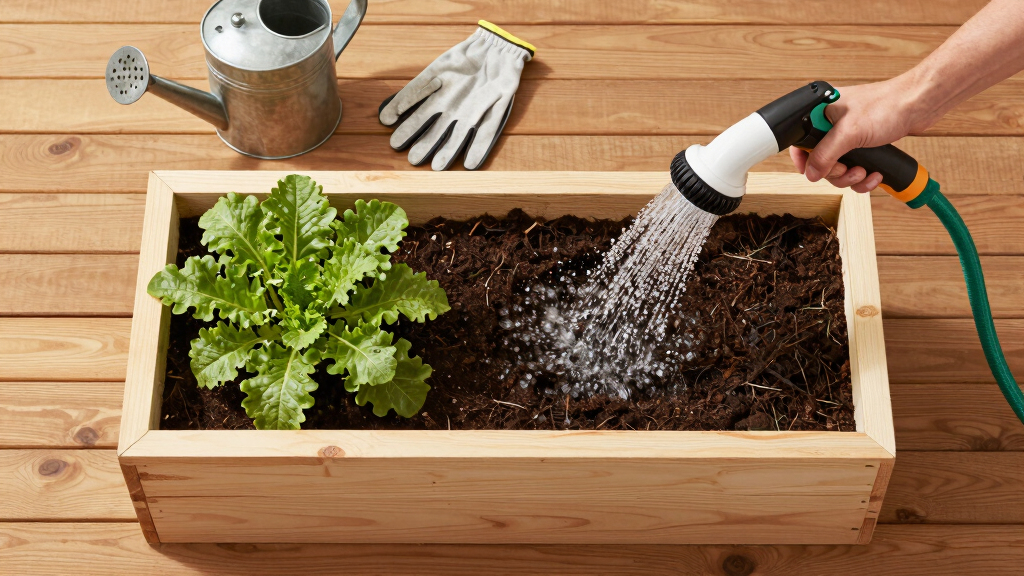
Use drip, soaker hose, or a gentle wand to avoid runoff.
Soak Deep
Let water reach deeper roots rather than wetting only the top crust.
Protect Surface
Refresh mulch so the moisture you added stays where roots can use it.
The less-effort setup is a system, not a single tool.
Combine direct-to-root delivery, timing automation, and moisture feedback. Each layer removes a little guesswork and a lot of wasted water.
Estimated Effort & Water Savings
Tools That Make Watering Precise
Drip irrigation
Delivers water slowly at the root zone with minimal overspray, evaporation, or runoff.
Timers
Automate the schedule so watering happens consistently, even on busy mornings.
Moisture sensors
Use real soil data to avoid watering when the bed is already moist enough.
Rain barrels
Store rainfall for efficient garden use and reduce reliance on tap water.
Choose the watering approach that fits your garden.
The most efficient choice is usually drip irrigation or a soaker hose paired with mulch. Hand watering still works, but it takes more attention to avoid shallow watering and overspray.
| Method | Water Efficiency | Manual Effort | Best Use | Automation Ready |
|---|---|---|---|---|
| Hand watering | ~ Moderate if done slowly | High | Small beds, spot checks, new seedlings | ✗ No |
| Drip irrigation | ✓ Up to 70% savings | Very low after setup | Most raised beds and busy gardeners | ✓ Yes |
| Soaker hose | ✓ Direct root-zone watering | Low | Straight beds and simple layouts | ✓ Yes |
| Sprinkler | ✗ More evaporation and overspray | Low to moderate | Temporary coverage only | ~ Limited |
| Self-watering reservoir | ✓ Consistent supply | Low | Containers and compact raised systems | ~ Sometimes |
From dry soil to easier mornings.
A reliable watering routine connects observation, delivery, protection, and adjustment. That chain is what keeps plants hydrated without turning the garden into another chore.
Observe
Check moisture, wilting, yellowing, and soil texture before deciding.
Deliver
Send water to roots using drip lines, emitters, or a soaker hose.
Retain
Add organic mulch so sun and wind do not steal moisture quickly.
Automate
Use timers and sensors to keep the rhythm consistent and precise.
Adjust
Shift timing for heat, rain, season, plant maturity, and soil mix.
Frequently asked questions.
Use these quick checks to tune your setup and prevent both soggy roots and thirsty plants.
How often should I water?
Most raised beds benefit from deep watering every 2–3 days, adjusted for climate, plant type, rainfall, and soil moisture.
What is most efficient?
Drip irrigation or soaker hoses with a timer, plus mulch, deliver the best balance of water savings and reduced effort.
How do I spot watering problems?
Over-watered plants often show yellow, soggy leaves and muddy soil. Under-watered plants wilt, dry out, and sit in cracked soil.
Which mulch works best?
Straw, wood chips, and composted bark retain moisture well while gradually improving soil structure and biological activity.
Water smarter, then step back.
Effortless watering starts with a plan: deep soak, mulch well, automate when practical, and check moisture before adding more. Your raised bed gets steady hydration, your plants grow stronger, and your mornings get lighter.
Why Deep, Less Frequent Watering Works Best for Your Raised Bed
Deep watering encourages roots to grow downwards, which is crucial for establishing a resilient and healthy plant. When roots penetrate deeper into the soil, plants become more drought-resistant because they can access moisture stored further below the surface, reducing the need for frequent watering. This approach also promotes a stronger root system, which supports better nutrient uptake and stability, especially during dry spells or heatwaves.
Watering thoroughly every 2-3 days, rather than daily quick sprays, ensures that moisture reaches the deeper root zones. For example, a slow-drip system running for about 30 minutes every 48 hours allows water to seep into the soil gradually, minimizing runoff and evaporation. This method not only conserves water but also discourages shallow root growth, which makes plants more vulnerable to drought and pests. The tradeoff is that deep watering requires more time per session but results in healthier, more drought-tolerant plants that need less frequent attention.
drip irrigation kit for raised beds
As an affiliate, we earn on qualifying purchases.
As an affiliate, we earn on qualifying purchases.
How Mulching Cuts Your Watering Needs in Half
Mulch acts as a protective layer over your soil, serving multiple functions that benefit your watering routine. By reducing the rate of water evaporation from the soil surface, mulch helps maintain consistent moisture levels, meaning you won’t need to water as often. Organic mulches like straw, wood chips, or composted bark are especially effective because they also improve soil structure over time, enhancing water retention and aeration.
Applying a 2-3 inch layer of mulch creates a barrier that moderates soil temperature, keeps roots cooler in summer, and prevents water from escaping quickly. This is particularly valuable during hot, sunny days when evaporation can deplete soil moisture rapidly. The key benefit is that mulch reduces the frequency and volume of watering needed, saving water and effort. However, over-mulching can sometimes suffocate plant roots or promote fungal growth if not managed properly, so applying the right amount and maintaining it is essential for optimal results.
As an affiliate, we earn on qualifying purchases.
Simple Tools That Make Watering Effortless and Precise
The right tools transform watering from a tedious chore into an efficient, precise task that saves time and water. Drip irrigation systems and soaker hoses deliver water slowly and directly to the root zone, ensuring deep, even watering with minimal effort. These systems help prevent overwatering and runoff, which can waste water and harm plants. Using timers with these systems automates the process, allowing you to set watering schedules that fit your garden’s needs, freeing you from manual labor.
Soil moisture sensors add an extra layer of efficiency by providing real-time data on soil moisture levels. This allows you to automate watering based on actual plant needs, avoiding waste caused by unnecessary watering. The tradeoff with these systems is the initial setup cost and complexity, but their long-term benefits include significant water savings, healthier plants, and reduced effort. These tools empower even those with limited mobility or busy schedules to maintain a thriving garden effortlessly.
As an affiliate, we earn on qualifying purchases.
Frequently Asked Questions
How often should I water my raised bed?
Most raised beds need deep watering every 2-3 days, but it depends on your climate, plant types, and soil. Always check the soil moisture to guide your schedule — if it feels dry an inch below the surface, it’s time to water again.
What’s the most efficient way to water a raised bed?
Using drip irrigation or soaker hoses with a timer, combined with mulch, offers the best mix of efficiency and effort-saving. These methods deliver water directly to roots, reducing waste and evaporation.
How can I tell if my plants are over- or under-watered?
Over-watered plants often show yellowed, soggy leaves, and the soil feels muddy. Under-watered plants wilt, have dry leaves, and the soil feels cracked or dry. Use your finger or a moisture meter to check soil moisture regularly.
Can I automate watering to reduce effort?
Absolutely. Installing a timer on your drip or soaker system, along with soil moisture sensors, can turn watering into a set-it-and-forget-it routine, saving you time and effort while keeping your plants perfectly hydrated.
What kind of mulch is best for water retention?
Organic mulches like straw, wood chips, or composted bark are excellent choices. They not only keep moisture in but also enrich your soil over time, turning your garden into a cozy, thriving space.
garden mulch for water conservation
As an affiliate, we earn on qualifying purchases.
As an affiliate, we earn on qualifying purchases.
Conclusion
Effortless watering starts with a plan. Invest in good tools, use mulch, and automate when possible. Your plants will thank you with lush growth and vibrant blooms — all while you enjoy a more relaxed gardening routine.
Picture yourself sipping coffee as your garden drinks itself — that’s the beauty of smart watering done right. Now, go out and make watering easier, so you can spend more time enjoying your garden’s beauty.
Cold & flu season Picks
humidifiers
As an affiliate, we earn on qualifying purchases.