
TL;DR

Turn quiet afternoons into listening time
- Thousands of audiobooks, podcasts and originals
- Listen on your phone, tablet or Echo — also offline
- Cancel anytime
To keep a country kitchen floor clean with less work, stop mud and grit at the door, sweep or vacuum often, and wipe spills before they dry. Use a well-wrung damp mop and a cleaner approved for your specific flooring, since wood, tile, stone, vinyl, and laminate have different care needs.
By suppertime, a country kitchen floor can tell the story of the whole day: a little garden soil by the back door, flour near the counter, and a sticky drop of jam beside the table. You do not need to scrub the whole room every evening. A few small habits can keep those everyday traces from turning into a weekend-long job.
This guide shows you how to keep a country kitchen floor clean with less work by catching dirt at the entrance, tidying as you go, and matching your cleaning method to the floor itself. That last part matters: “country kitchen” describes a style, not a flooring material. Sealed wood, tile, natural stone, vinyl, and laminate can each need different care, so check the maker’s instructions before trying a cleaner or tool.
Think of it as tending the kitchen in small passes, much like pinching herbs while supper simmers. A quick sweep after gardening and a prompt wipe of a spill are easier than scraping dried mud or sticky syrup later. You can make the routine fit your household, your floor, and the rhythm of your day.
Place an outdoor scraper mat and a washable indoor mat at the door most used for garden trips.
Sweep or vacuum the main kitchen paths regularly, especially after cooking or coming in from outdoors.
Blot fresh spills, then use a cleaner approved for your specific floor and follow its directions.
Use a damp, well-wrung mop; avoid standing water and do not use steam unless the flooring maker says it is safe.
Check care instructions before using vinegar, acidic cleaners, polish, wax, or concentrated products.
A cleaner country kitchen floor with less work
Stop dirt at the door, catch spills while they are fresh, and match your cleaning method to the floor.
Keep dirt near the door
A few simple barriers limit how far garden mud and grit travel.
Place an outdoor scraper mat by the entrance you use most.
Add a washable indoor mat and clean it regularly.
A shoe-free rule or boot tray can help reduce tracked-in dirt.
Make quick passes part of the day
A brief sweep or vacuum every day or two can prevent crumbs and grit from building up.
Clear the main paths
Sweep or vacuum around the stove, sink, table, and doorway.
Wipe while fresh
Blot liquids and lift sticky solids before cleaning the spot.
Make cleanup easy
Store a broom, microfiber cloths, and a floor-safe spot cleaner within reach.
Care depends on the floor
“Country kitchen” describes a style, not a flooring material. Check the maker’s care instructions before using a cleaner or tool.
| Floor | Everyday care | Take extra care with |
|---|---|---|
| Sealed wood | Soft attachment, lightly damp mop, approved cleaner | Standing water and steam unless permitted |
| Tile | Remove grit; use a tile-compatible solution | Grout buildup and its care needs |
| Natural stone | Use a cleaner safe for that specific stone | Acidic cleaners on marble or limestone |
| Vinyl or laminate | Soft broom or vacuum; well-wrung mop | Steam, polish, wax, or concentrated cleaners without approval |
Keep moisture and harsh products in check
Use a damp, well-wrung mop and follow the floor maker’s directions for cleaning and drying.
Catch Mud and Grit Before They Cross the Kitchen
To keep a country kitchen floor clean with less work, stop outdoor dirt at the doorway with an outdoor scraper mat and a washable indoor mat. A shoe-free household rule can help reduce the grit and mud that reach the floor. Those simple barriers mean less sweeping across the whole room.
Place the mats where people naturally enter, especially by a door that opens onto the garden or path. For example, if you often carry in a basket of tomatoes through the back door, set the indoor mat where you can pause and set the basket down safely. Mats work best when you clean them regularly; a mat full of dry grit can send particles back onto the floor.
Think about the route dirt takes. If muddy boots cross the kitchen to reach a utility room, a small boot tray near the entrance can keep the mess in one place. On rainy days, leave a cloth nearby for wet paw prints or a damp hem. These small changes help prevent dirt from spreading without asking you to change the whole way you use your kitchen.
Rugs can soften a standing area and catch crumbs, but choose one that stays put and can be washed or dried. Lift it now and then to check for trapped moisture or grit underneath. A clean, dry mat is a helpful doormat; a damp one can become another chore.
Products Worth Considering

Orbit B-hyve XR 16-Zone Indoor/Outdoor Smart Sprinkler Timer
Orbit B-hyve XR 8-Zone Indoor/Outdoor Smart Sprinkler Controller

Orbit B-hyve Smart Indoor/Outdoor 12-Zone Sprinkler Controller
As an affiliate, we earn on qualifying purchases.
Use a Five-Minute Routine to Stay Ahead of Crumbs
A brief sweep or vacuum every day or two keeps crumbs and grit from building into a larger cleaning job. In a busy kitchen, one short pass after cooking or gardening may be enough to keep walkways tidy. Frequent light cleaning is usually easier than tackling several days of dirt at once.
- Pick up loose items. Move a chair or lift a dish towel that has fallen on the floor.
- Sweep or vacuum the main paths. Pay attention to the sink, stove, table, and doorway, where crumbs and grit collect.
- Spot-clean visible messes. Use a floor-safe cloth or cleaner for sticky spots, following the product directions.
- Put your tools back nearby. Keeping a broom or cordless vacuum handy makes the next pass easier.
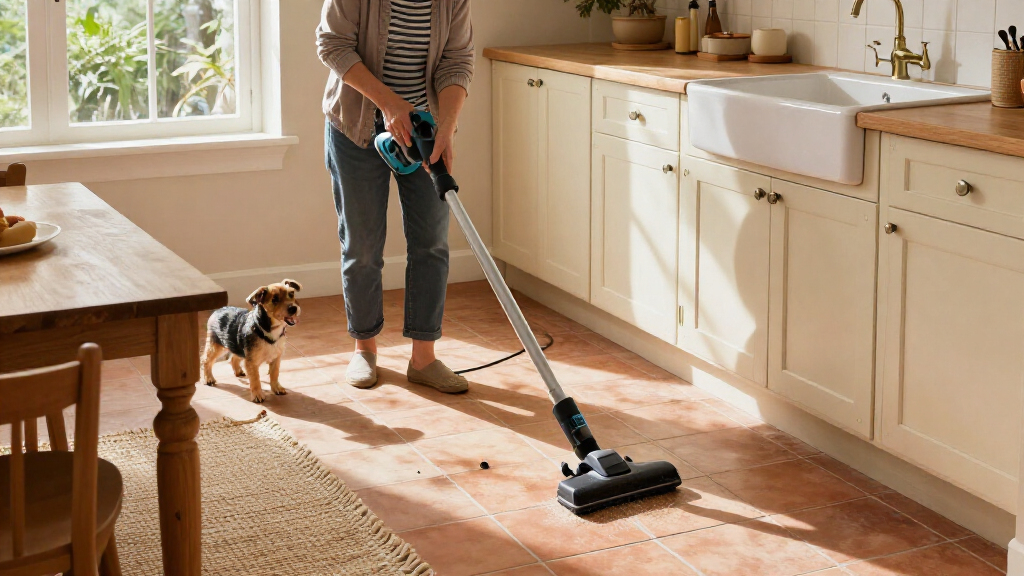
For instance, after making toast and soup, you might spot breadcrumbs under the counter and a splash of broth near the stove. A quick hard-floor vacuum pass and a damp cloth can handle those while the kettle heats. On a quiet day, you may only need to clean the spots you can see.
Use a hard-floor setting on a vacuum and avoid a beater brush on delicate flooring. The aim is to lift grit without scattering it or scratching the surface. You do not need to follow a strict clock: pets, muddy weather, outdoor access, and cooking habits all affect how often your own floor needs attention.
Wipe Spills Before They Turn Into Sticky Scrubbing
Blot a fresh spill promptly with a cloth, then clean the spot with a method approved for your floor. That small response can prevent a splash from drying into a sticky patch or sitting long enough to mark a vulnerable surface. Deal with the mess while it is fresh, and the job usually stays local.
If a spoonful of jam lands beside the breakfast table, lift any thick residue first rather than smearing it across the floor. Then use a damp cloth and, if needed, a cleaner labeled safe for that flooring. Follow the cleaner’s directions about rinsing; dry the area if the floor’s care guidance recommends it.
Water deserves extra care on sealed wood and natural stone. Standing moisture can damage wood, while staining substances or unsuitable cleaners can harm some stone. When you mop, use a well-wrung, damp mop instead of leaving puddles behind. Too much water may also affect some flooring adhesives or leave a dulling residue.
A small kit can make quick cleanup feel less like a production: keep a few microfiber cloths and a suitable spot cleaner within easy reach. Store supplies safely and follow their labels. If a spill is oily, heavily colored, or unusually large, check the floor maker’s guidance before trying a stronger cleaner. A patient, floor-safe cleanup beats a hurried scrub with the wrong product.
Choose Cleaning Methods That Suit Your Floor
The safest way to clean a country kitchen floor depends on its material and finish, so check the flooring maker’s care instructions before using a mop, cleaner, steam, polish, or wax. A room’s country style does not tell you whether its floor is sealed wood, tile, stone, vinyl, or laminate. Match the method to the surface to avoid turning a quick cleanup into a repair problem.
| Floor type | Everyday care | Take extra care with |
|---|---|---|
| Sealed wood | Sweep or vacuum with a soft floor attachment; use a lightly damp mop and approved cleaner. | Standing water and steam unless the maker permits it. |
| Tile | Remove grit, then use a tile-compatible solution. | Grout buildup; check whether the grout needs occasional targeted cleaning or resealing. |
| Natural stone | Use a cleaner labeled safe for the specific stone. | Acidic cleaners on stone such as marble or limestone; sealing needs vary. |
| Vinyl or laminate | Use a soft broom or vacuum and a well-wrung mop. | Steam, polish, wax, or concentrated cleaners without approval. |
These differences have practical consequences. Wood and laminate can be vulnerable where moisture reaches joints or edges, so a mop that leaves standing water may cause problems beyond the visible surface. Tile may tolerate more water, but grime can settle into grout, making the joints look dirty even when the tile itself is clean. Natural stone varies by type and finish, which is why a cleaner that works on one stone may dull or etch another. Vinyl can also vary by finish and installation, so avoid assuming that a familiar product is safe just because the floor looks resilient.
For example, a splash of vinegar may seem like a convenient all-purpose cleaning trick, but vinegar can etch some natural stone and may affect certain finishes. Steam is also not a universal shortcut: heat and moisture can harm some flooring or installations. A stronger cleaner may remove a stubborn mark faster, but that convenience can come at the cost of a damaged finish or residue that attracts dirt. Use the gentlest method the maker approves, and reserve more intensive care for situations where the instructions support it.
When you are unsure what the surface is, look for the flooring paperwork, a product label, or the manufacturer’s care instructions. If you rent or inherited the home, ask the owner or check any records left with the house. Identifying the material first helps you choose a method that solves the mess without creating a more expensive or difficult problem later.
Keep Your Cleaning Tools Close and Your Floor Routine Simple
A small cleaning kit near the kitchen helps you handle crumbs and spills before they spread. Keep a broom or cordless vacuum, a few microfiber cloths, and a floor-safe spot cleaner where you can reach them easily. Convenience makes quick cleanups more likely; a tool tucked away in a distant cupboard is easy to put off.
Imagine kneading dough for a pie and finding flour dust near the counter when you finish. A cloth and broom in the nearby pantry let you tidy that patch before someone walks flour through the room. The same goes for coffee drips, soil from a dropped herb pot, or cereal under the table. A small kit saves you from searching around while the mess sits there.
Keep supplies together in a stable spot that is comfortable for you to reach, and follow cleaner labels for storage and use. You may prefer a light broom if a vacuum feels cumbersome, or a cordless vacuum if crumbs tend to collect beneath chairs. The best setup is the one you can use without wrestling with it.
For a weekly rhythm, sweep the busiest paths as needed and mop only when the floor looks dirty or feels sticky. A more thorough wash can wait until it is useful. If the kitchen sees heavy traffic, pets, or frequent garden trips, you might sweep daily; on a quieter week, every other day may do. Let the floor show you what it needs.
Make Grout and Busy Walkways Easier to Manage
Regularly removing loose grit is one of the simplest ways to keep tile and grout from looking dirty. Sweep or vacuum the paths where people walk most, then clean grout spots with a product labeled safe for both the grout and tile. Target the problem areas instead of scrubbing every line after every meal.
Take the path from the back door to the sink. On a wet afternoon, shoes may leave a faint dusty trail that settles along grout lines. A quick sweep before mopping lifts that grit first, so the damp mop is not pushing it into the joints. If one patch remains dark or sticky, a targeted clean can focus your effort where it is needed.
Grout care varies by type and condition; some grout may need resealing, while other grout may not. Check the maker’s instructions before applying a sealer or a strong cleaner. Harsh chemicals can be unsuitable for grout, tile, or both, even if they promise a quick result.
If you use a kitchen rug near the sink, lift it occasionally and clean beneath it. Flour, crumbs, and moisture can collect out of sight. Choose a slip-resistant rug and wash or dry it as needed, so it catches a little mess without hiding a bigger one. These small checks help keep a busy kitchen pleasant underfoot.
Frequently Asked Questions
How often should I sweep a country kitchen floor?
Sweep or vacuum as needed; a busy kitchen may call for a brief daily pass, while a quieter one may need less. Pay extra attention after cooking, gardening, or muddy weather, when crumbs and grit are more likely to gather.
What is the easiest way to keep mud and grit out?
Put an outdoor scraper mat and a washable indoor mat at the entrance, clean them regularly, and consider a shoe-free household rule. A boot tray can also keep wet footwear in one place instead of tracking mud across the kitchen.
Can I use vinegar to mop my floor?
Vinegar is not a universal floor cleaner. It can etch some natural stone and may affect certain finishes, so check your flooring maker’s instructions before using it.
Can I use a steam mop on a country kitchen floor?
Use steam only if the flooring maker explicitly says it is safe for your floor and installation. Heat and moisture can damage some wood, laminate, vinyl, grout, and flooring adhesives.
What should I do about a sticky spill?
Lift away thick residue, then wipe the spot with a damp cloth and a cleaner approved for the floor. Follow the cleaner’s directions about rinsing, and dry the area if the floor guidance calls for it.
How can I clean grout without scrubbing the whole floor?
Sweep regularly to remove loose grit, then use a grout-safe cleaner on the spots that need attention. Check product guidance for both the grout and tile, and follow the maker’s advice about whether the grout needs sealing.
Conclusion
Keep the routine small: catch dirt at the door, sweep the paths you use most, and wipe spills while they are fresh. Then match your mop and cleaner to the flooring beneath your feet. If you remember one thing, remember this: the right quick cleanup beats a hard scrub with the wrong method.
Let your kitchen keep its country charm without asking you to spend every spare hour cleaning. A clean mat by the back door, a broom within reach, and the soft hush of a quick sweep can be enough to welcome you back in from the garden.